The Godot Art Expo has opened: its eleventh year alongside young artists.
What makes an initial introduction the true beginning of an artistic career? At the press opening of the Godot Art Expo on 6 in October, the relationship between talent, professional attention and the public was brought to the fore. Alongside JumpSTART’s selection, which showcases students and fresh graduates, the institute’s digital developments pose the same question: how do the work and its audience find each other?
Public Attention Space
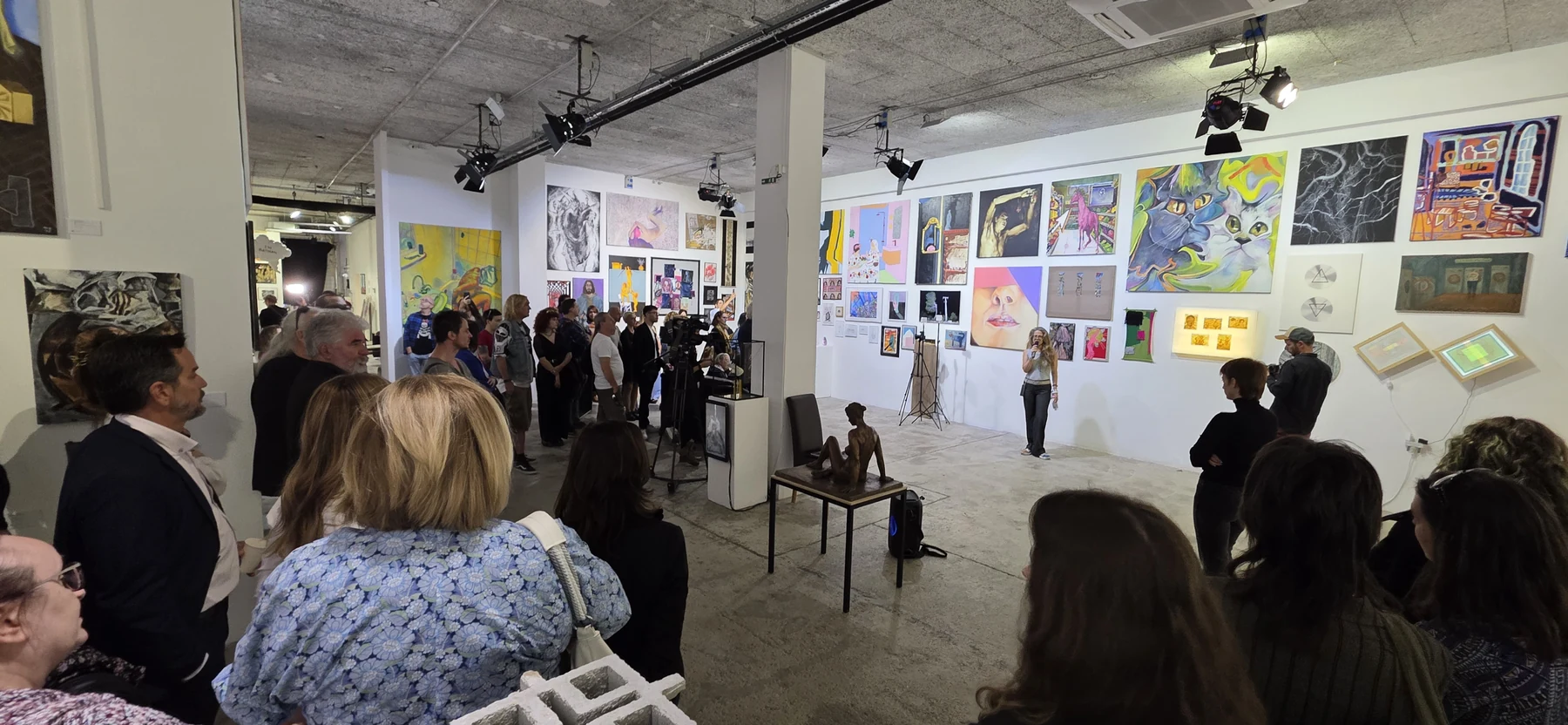
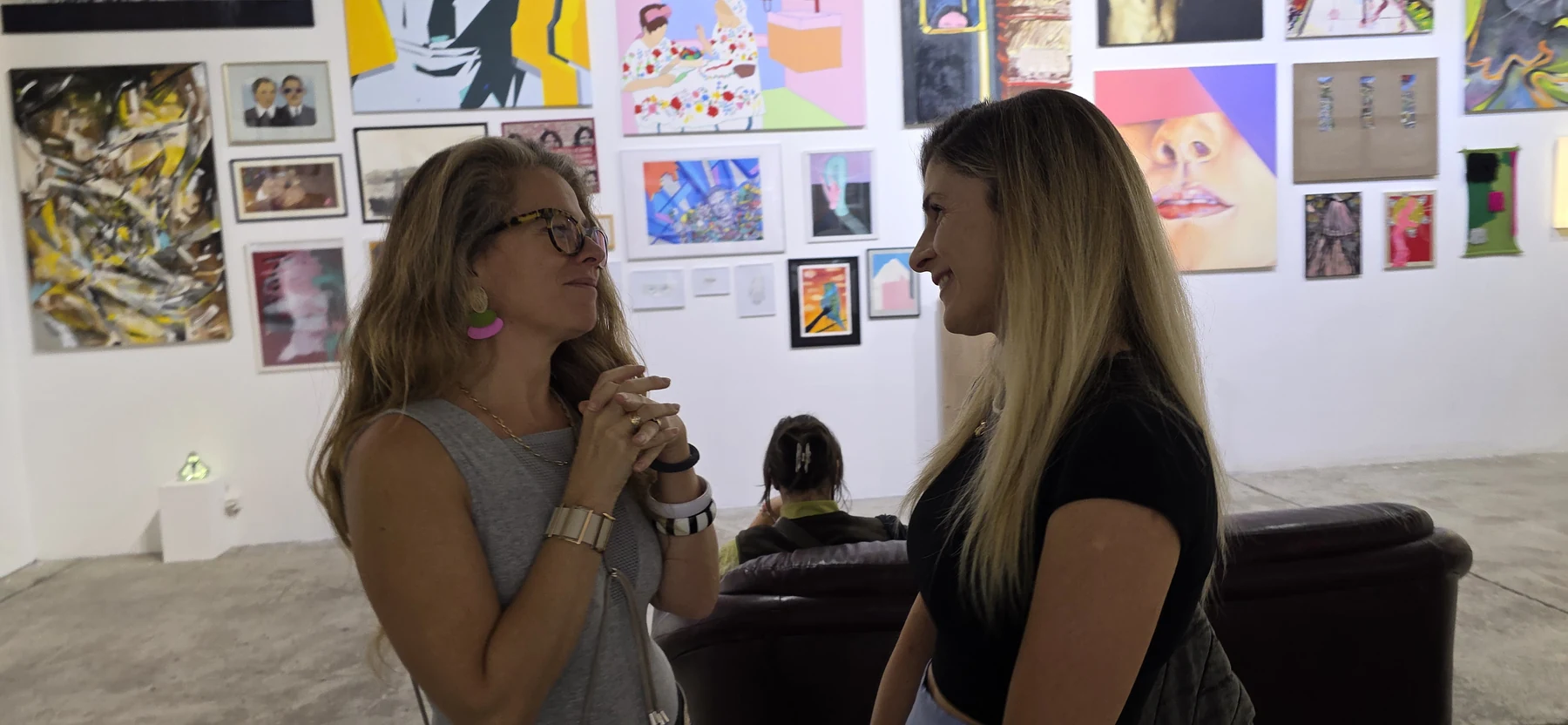
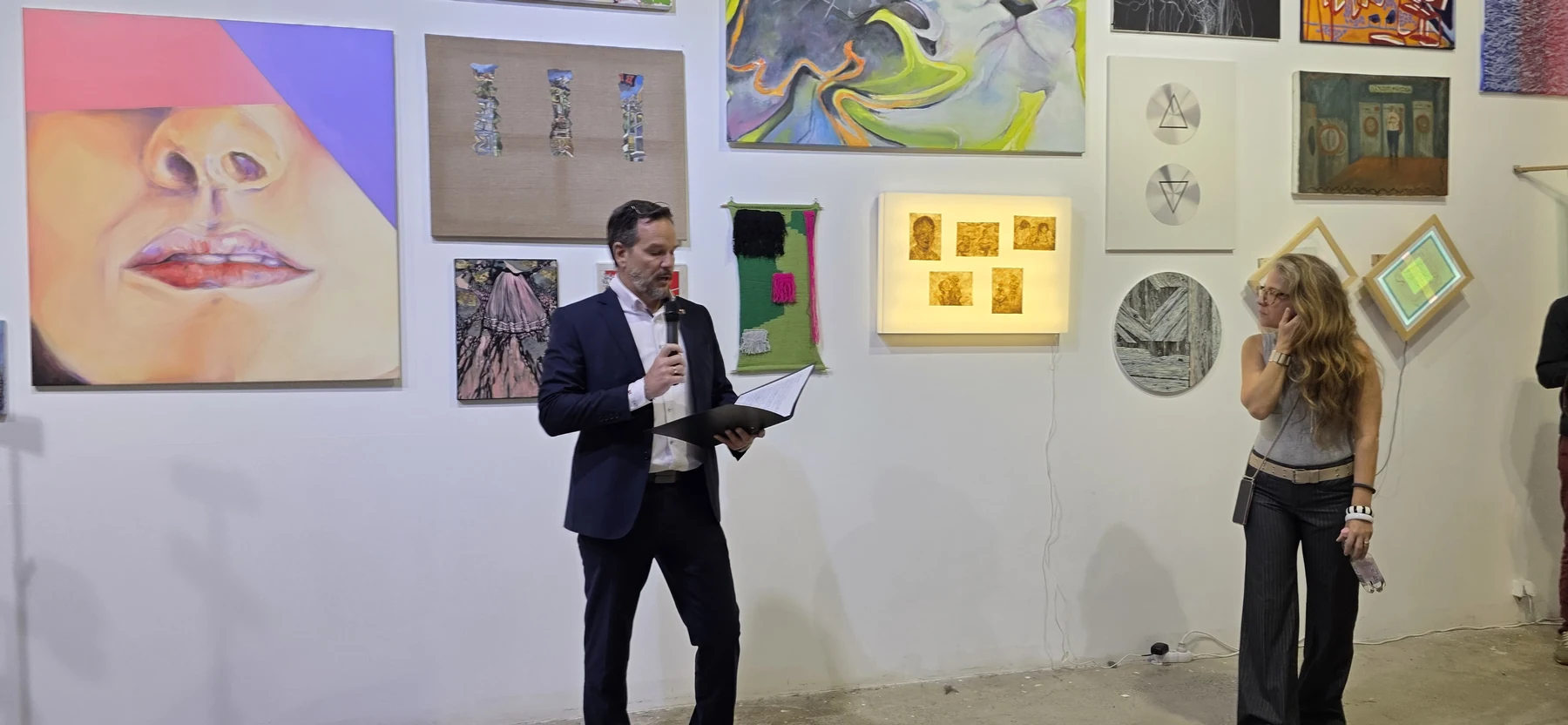
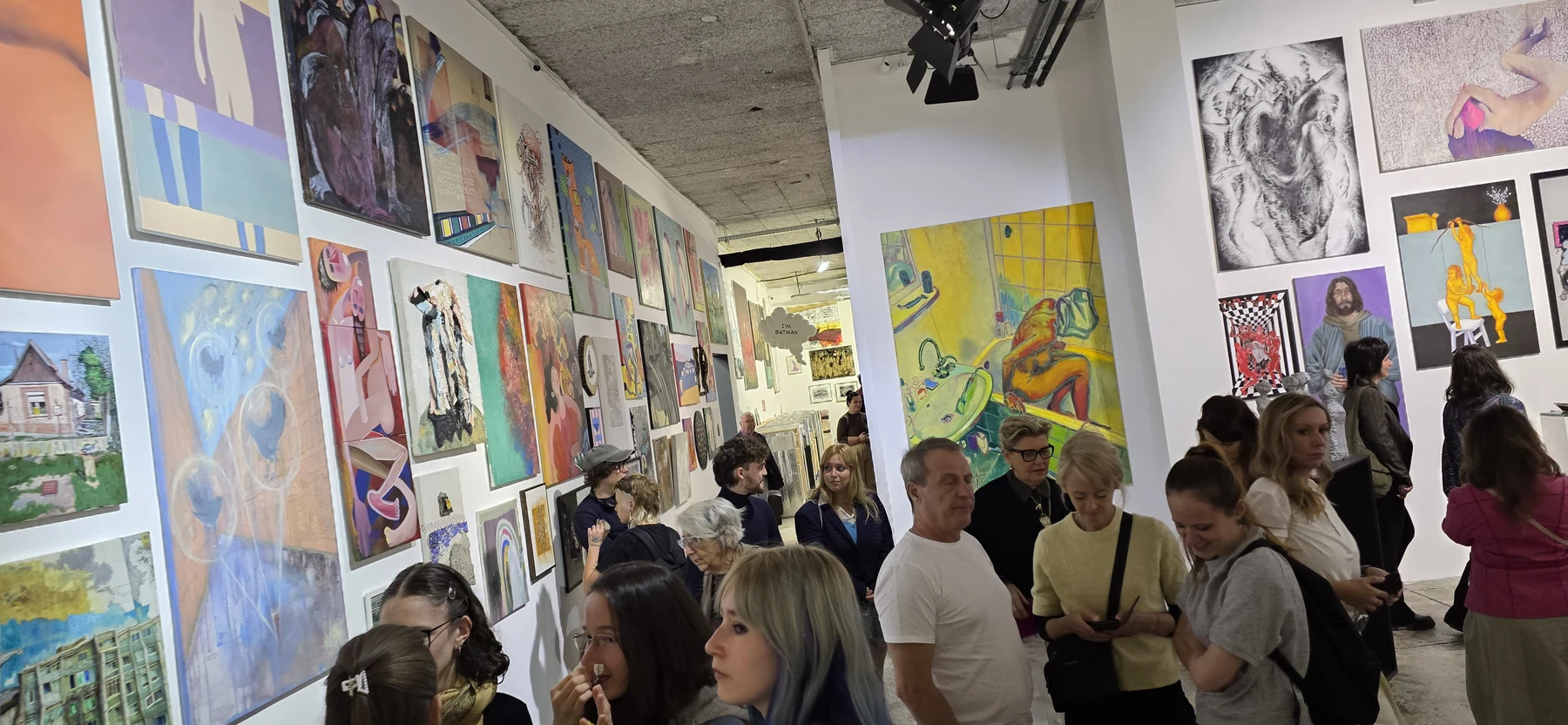
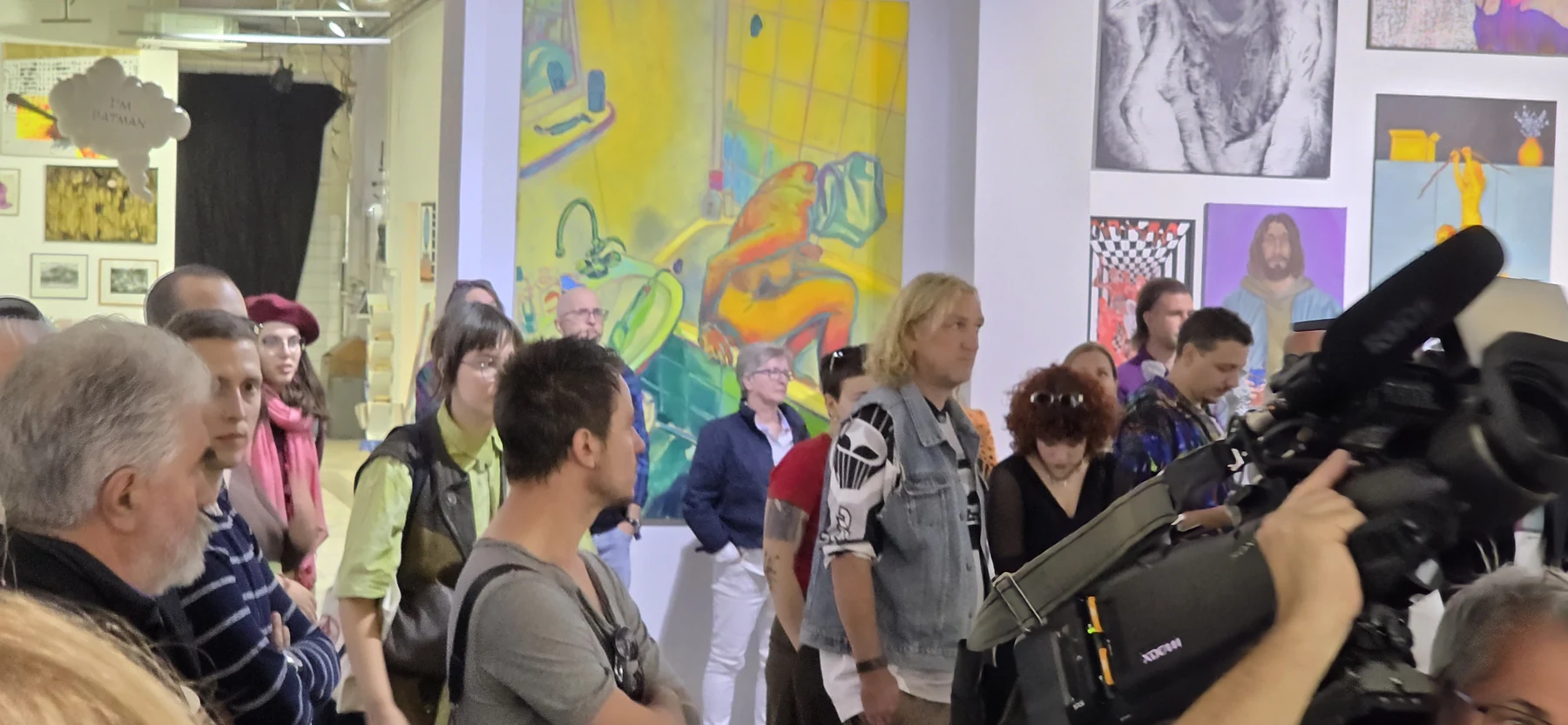
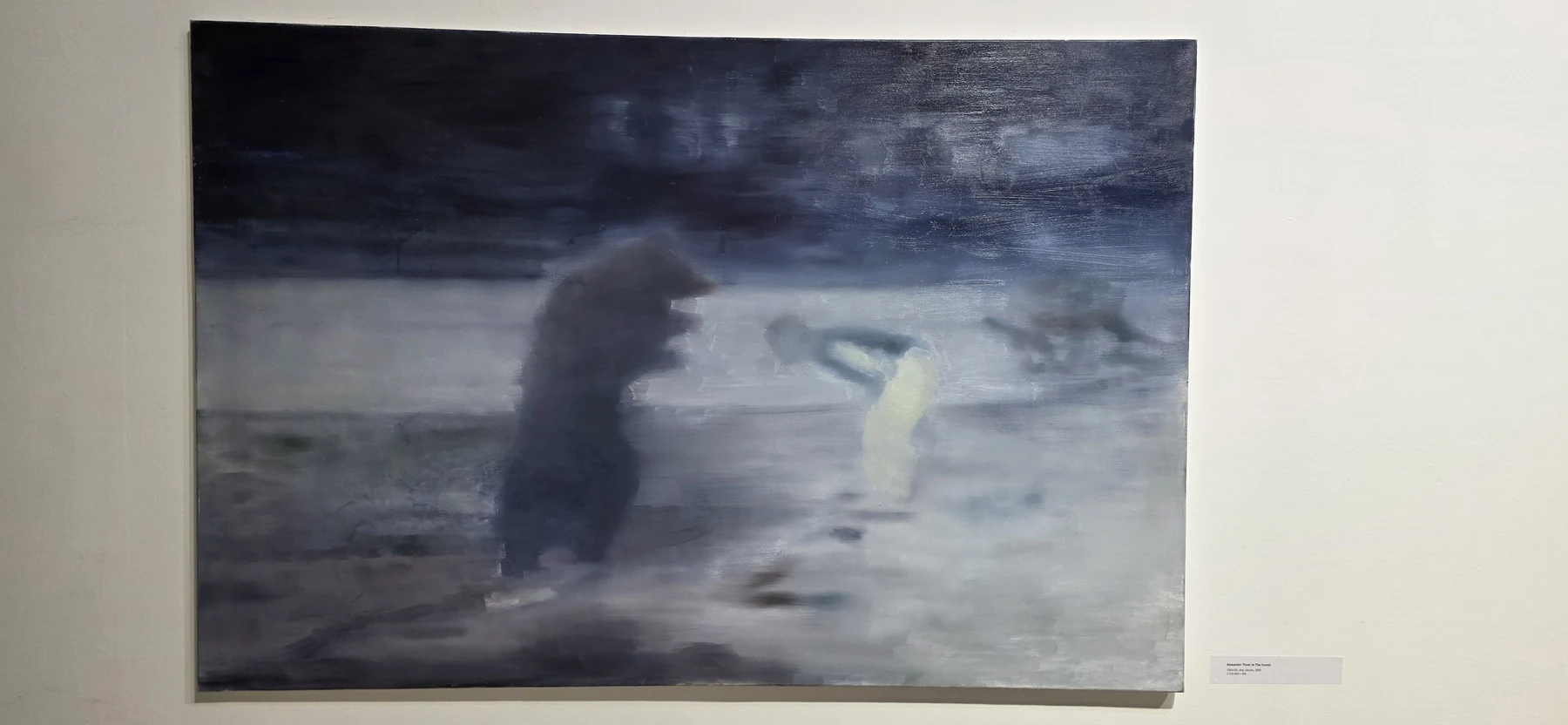
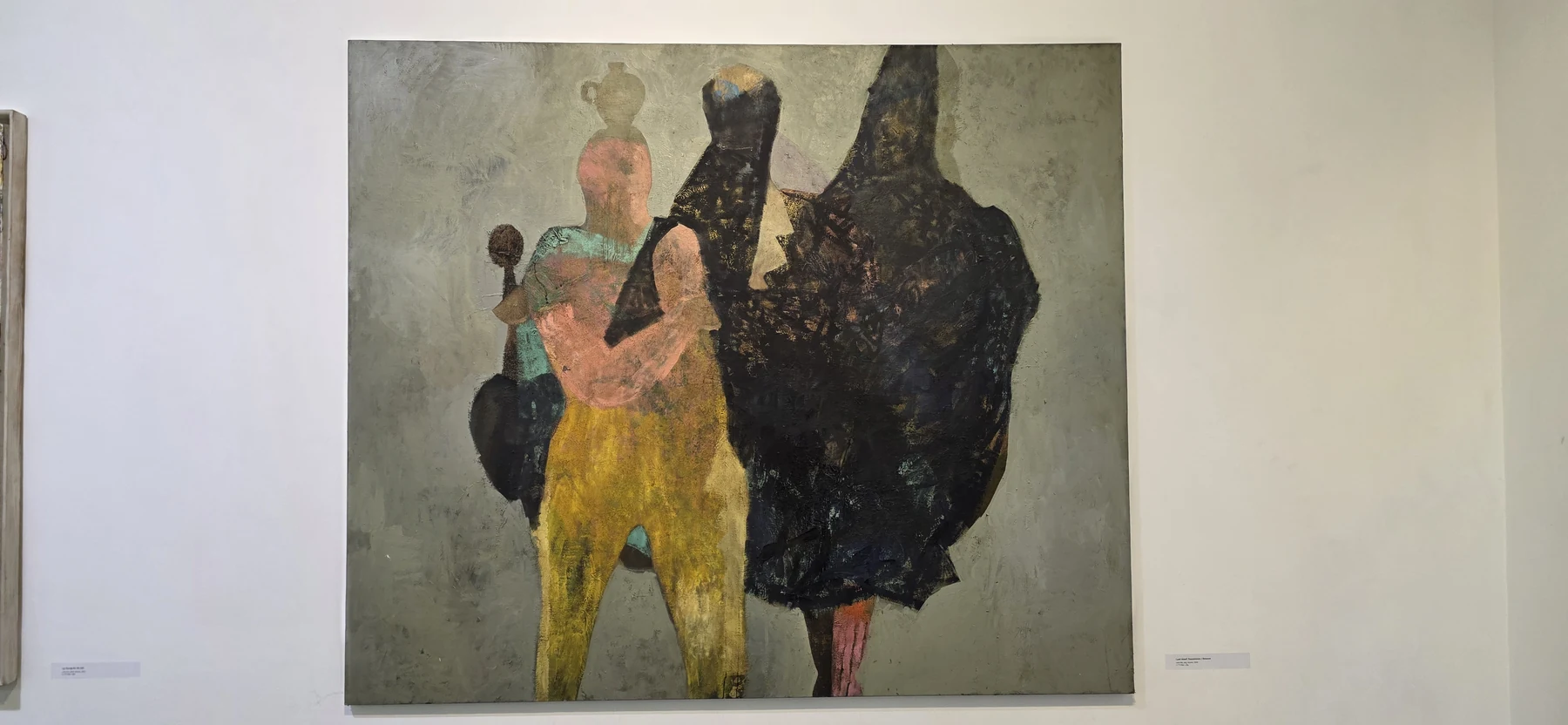
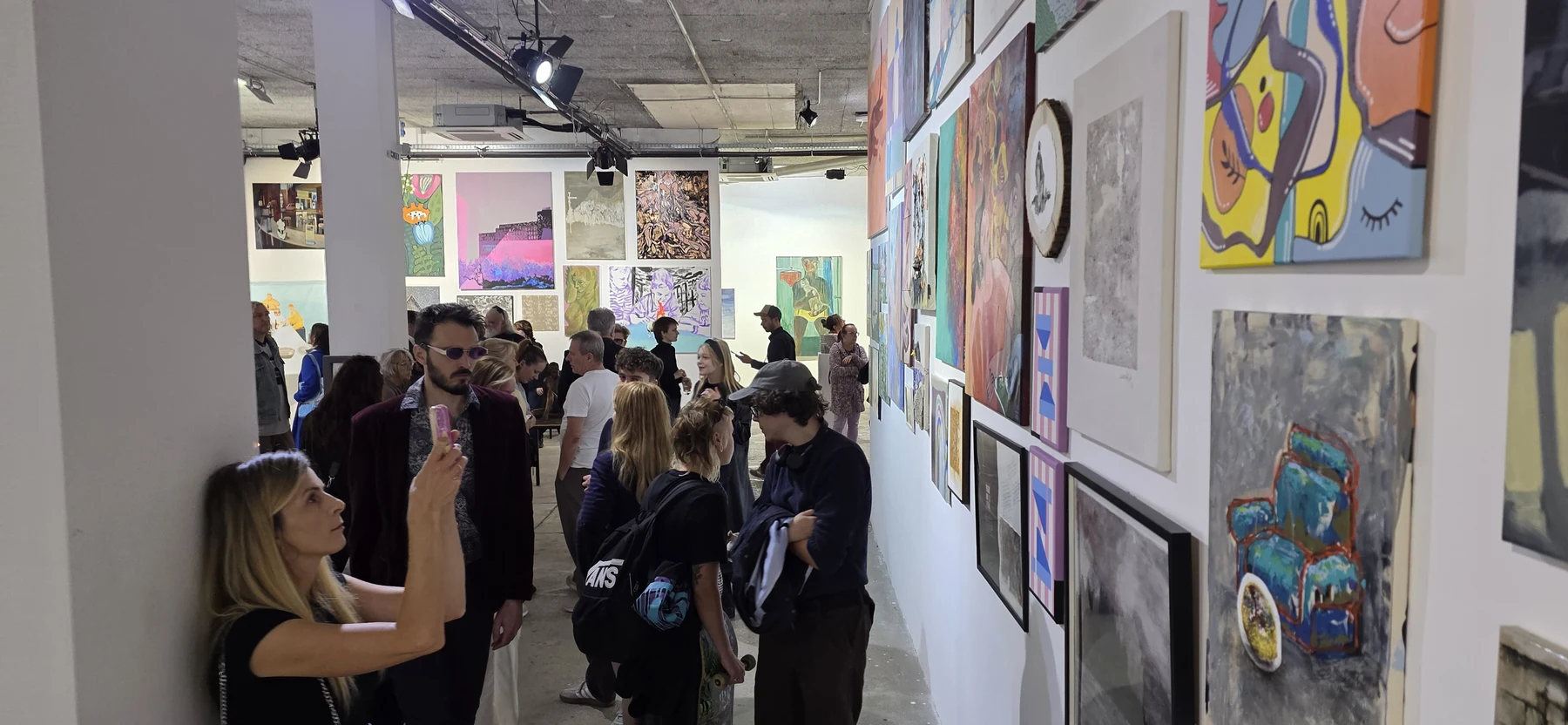
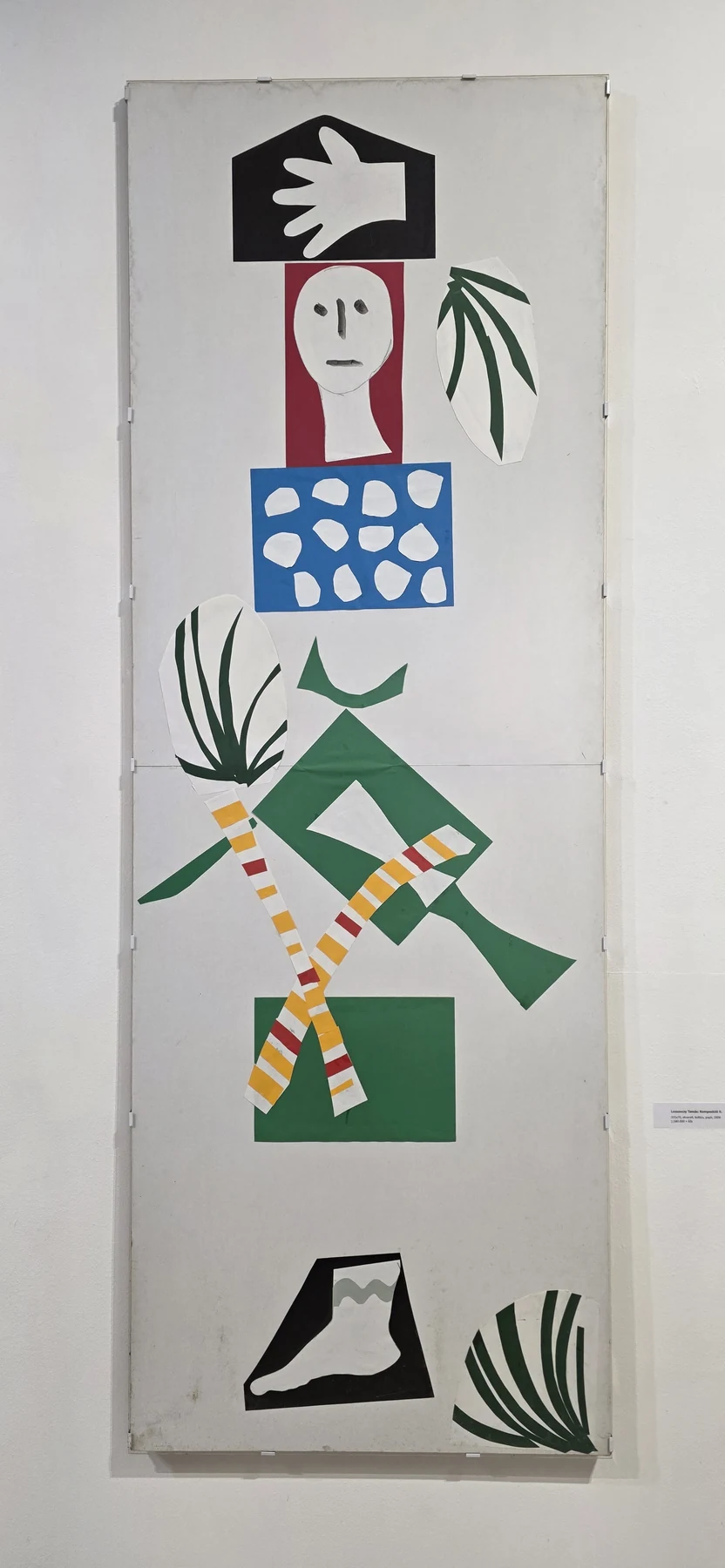
On the walls, between pictures arranged side by side, there are sculptures, interviews before the works and small conversations: in the October 6 press‑event photos, the exhibition and the dialogue about it are almost inseparable. Behind the camera, more images unfold, with other visitors pausing at each work beside those in conversation. The works here give the immediate setting of the meetings.
This proximity is particularly important at the start of a career. A work behaves differently in a studio, during a university consultation, and at a public exhibition. In the first two settings the process of making, experiment and professional feedback take the foreground. In the exhibition space the artwork also encounters an audience who knows nothing of its background. The image, the form and the material must still speak to someone in this situation.
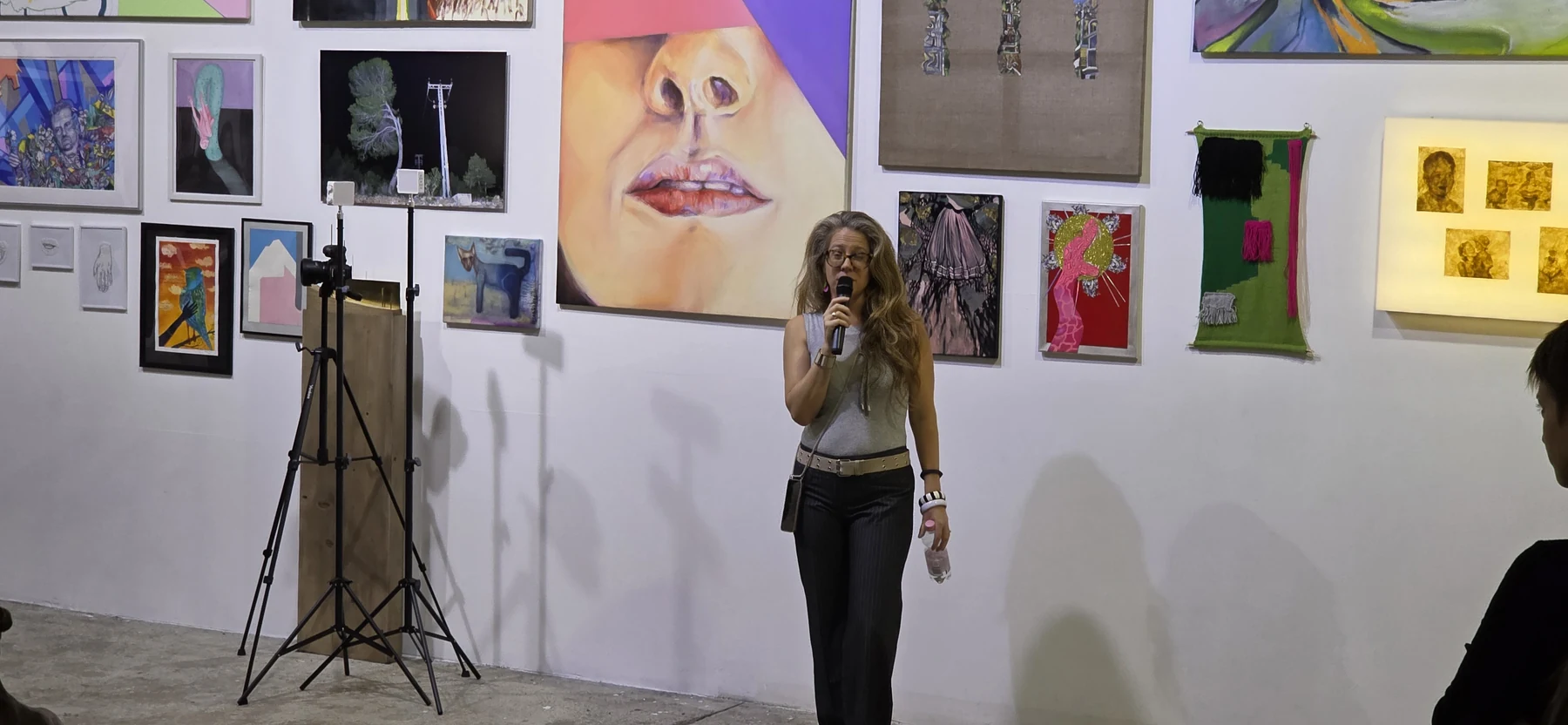
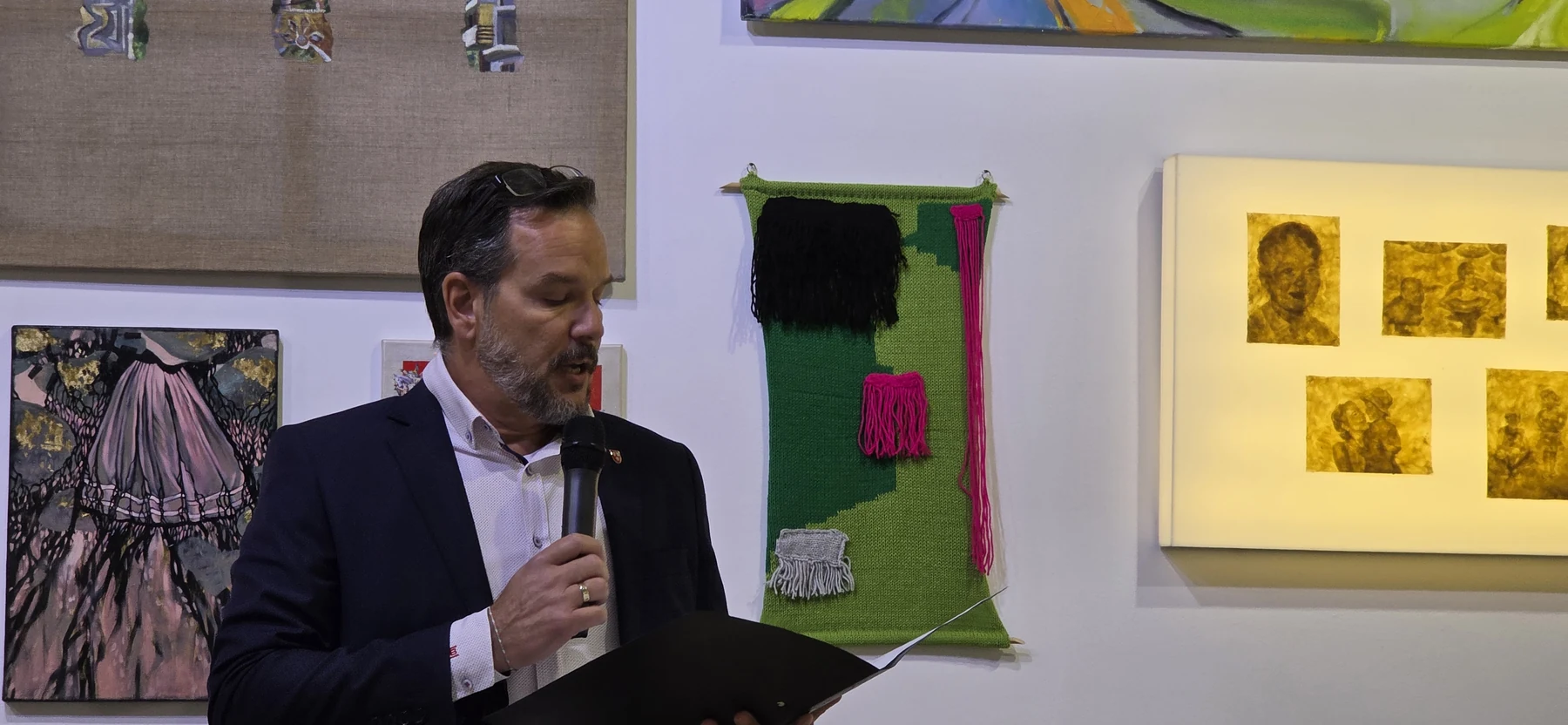
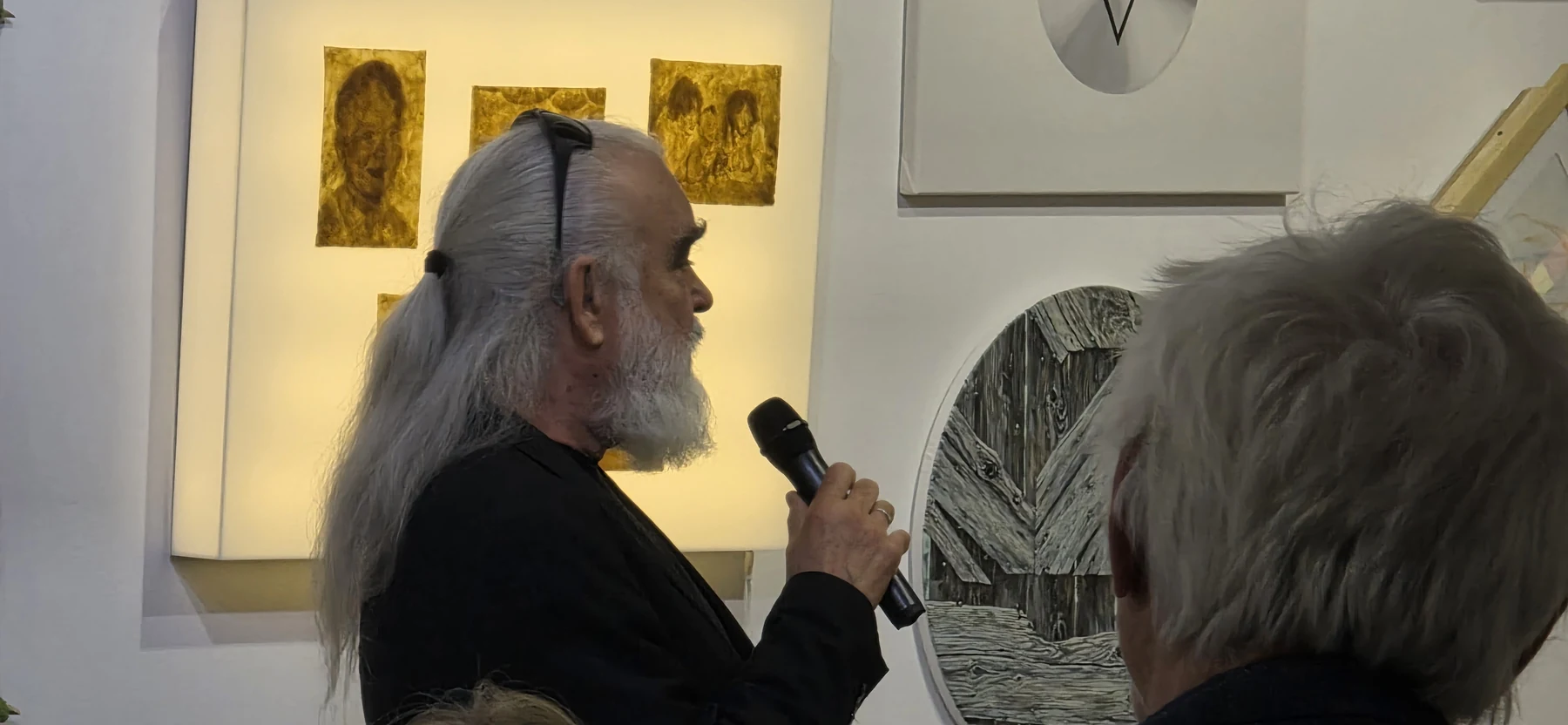
At the Godot Art Expo’s press opening. Gergely Dóczi, József Szurcsik and Borbála Laczkovich The common theme of the speakers’ remarks was support for young artists. In relation to JumpSTART, the opportunity to introduce oneself, professional assistance and engagement with audiences and collectors all received emphasis. Together, these topics draw attention to one of the most vulnerable stages of an artistic career: how creative work can continue after the first public appearances.
The meeting of talent and opportunity
At this year's Expon, the Hungarian University of Fine Arts. The JumpSTART programme operates as an independent exhibition unit. appears. Current students and recent graduates alike are featured in the selection. Their shared presence reveals the moments close to each other’s start yet distinct: the search that forms in the university studio and the first experiences of independent artistic life.
The designation of a young artist can easily conceal these differences. It does not signify a single generational style or a shared visual language. What makes such introductions exciting is that the viewer may still encounter developing, divergent directions. In this phase of their emerging oeuvre, a particular material choice, a recurring motif, or a distinctive compositional decision can all signal personal creative thinking.
The professional stakes of an introduction are therefore far greater than a work simply being displayed on a wall for a few days. An exhibition offers a chance to compare works, to rethink one’s own decisions, and to let the creator experience what the audience notices. A question can sometimes bring out a detail that was apparently obvious to the maker; a passing glance may serve as feedback where professional relationships have not yet been established.
At the press event, journalists also asked the young exhibitors present about their own work. This direct opportunity to speak adds the artists' voice to the public presence of the pieces. The discussion may bring up the questions behind the work, while for the viewer the possibility of personal interpretation remains open.
Eleven years: from introduction to continuity
A Godot Art Expo 2016 began, so this year’s event marks its eleventh year, a work in which the showcase of newcomers takes a decisive role. The repetition has institutional importance. A returning exhibition creates an opportunity for further artists to step before the public, and during this time visitors’ attention turns into experience and remembrance.
The event’s curator, Laczkovich Borbála, has been accompanying this process from the very beginning. Curatorial work at this stage extends beyond selecting works to also addressing their relationships. What occurs between two distinct visual worlds? Where is it appropriate to condense the spectacle, and which piece deserves greater distance? How can a fledgling artist’s work be presented so that it stands in its own right, yet still reads as part of a larger exhibition concept?
The image panels seen in the Expo’s photographs are densely arranged, giving even space for comparison. The eye jumps from one step to the next, from harsh colour surfaces to restrained graphic solutions. Visitors can shape their own route through this diversity: they might pause at an unfamiliar name, or return to a work that had previously escaped notice. Even such small, personal decisions form the foundation of one’s artistic knowledge.
The long‑term purpose of supporting young people is realised in this continuity. The exhibition, professional attention and collectors’ interest can each contribute in different ways to ensuring the artist’s work can be carried on. Talent needs situations that make it visible, and institutions that recreate those situations.
The exhibition space of the 21 century: what happens once an artwork has been seized?
Godot’s digital developments spring from one of the most important moments of a visit: when a work catches our eye and we wish to come closer to it.
The exhibition experience today often starts on a mobile phone’s screen, then continues within the gallery space, and later returns again through a single image. The institution itself can also shape that process. In its own developments, Godot explores how physical presence, personal choice and digitally accessible knowledge of artworks can be linked together.
Artificial intelligence is given a concrete task here: it aids navigation by searching for visual connections. Visitors can start from their own interests, and the institution provides the opportunity to move forward. For a fledgling artist, this can be especially important, as a strong visual experience can even lead to recognition for an unknown name.
ARTCRUSH: a personal selection based on first impressions.
The ARTCRUSH First, it shows the artwork itself. The meeting is not preceded by the artist’s name or the price: the visitor reacts to the spectacle, likes it, especially likes it, or moves on. This simple situation demands special attention. A colour relation, a gesture, a scene that looks familiar can already speak to us before we know where the picture comes from.
This order also matters when showcasing young artists. Even the work of a relatively obscure creator can spark interest with its own visual power. For the viewer, the first step may become easier: they need not navigate the names and professional references of contemporary art in advance to notice what draws them.
The system tailors later recommendations to the choices made. It combines visual similarities, visitor feedback and curatorial perspectives, while still leaving room for new discoveries. Popular works are added to a dedicated selection; opening one of them already grants access to the artist and work details. Thus the first impression can become a starting point for getting to know the collection.
The pedagogical possibility lies chiefly in the return. What do we retain from the first choices? Which work becomes more intriguing the second time? Why were works that at first seemed distant placed beside one another? Personal selection supplies material for these questions. After a quick decision, the slower observation, comparison and reflecting on one’s own taste may surface.
From the photographed work to getting to know it
A Godot's image recogniser It further fuels the curiosity that arises in the exhibition space. A visitor can photograph a piece with their own phone, or upload an image that has already been completed. The system searches the Godot catalogue for a possible match, which may provide the artist’s name, the title of the work, the technique, the dimensions, the price and further details.
The significance of technology is truly understood in everyday situations. At the exhibition we encounter many works, and later we often recall only a particular hue or detail. Image recognition can link visual memory with the catalogue's structured information. The visitor can move forward from that experience, which they genuinely take away with them.
The found works can be saved to their own album, so the selection can be revisited later, and it can serve as a basis for a personal conversation with the institution's staff. The separately available ("Ilyet keresek") function Suggest works that are visually related to an uploaded image. Identification and the search for similarity are two distinct operations: one can lead to the data of the artwork observed, the other may open the way to new creations.
Recognition is also influenced by the quality of the photograph and the material listed in the catalogue. Its value lies in helping visitors obtain reliable artwork information and facilitating further research. The interpretation of the work remains, meanwhile, an open, personal process.
The institution of curiosity
JumpSTART and digital development converge at this point. One creates a public debut opportunity for young creators, the other offers audiences multiple routes to the works. Both require institutional attention: recognising that a first encounter alone is insufficient without the possibility of continuation.
The thrill of the 21.‑century exhibition space is also evident in this diverse range of continuations. The visitor can look, choose, return, build their own album, and then stand before the work again. After the digital image, the real scale, the surface and the material offer a different experience. Online exploration and physical presence can thus enrich each other.
The Godot Art Expo opened its doors to the public from October 7. In its eleventh year, the event gives visitors the chance to encounter works and artists they have not yet met. From an artistic career point of view, the weight of this attention is significant. For a visitor, however, this can spark an interest that may return in the future.
Godot Art Expo ’26 – Visitor Information
2026.
October 7–18.
Daily 11:00–19:00.
Godot Contemporary Art Institute
1036 Budapest, Fényes Adolf Street 21
Expo details and ticket information · The history of the Godot Institute
I'm going to try ARTCRUSH. · I'll try the artwork recogniser.
Photos: Zoltán Sáfár. The photographs were taken at the 2026 October 6 press event.