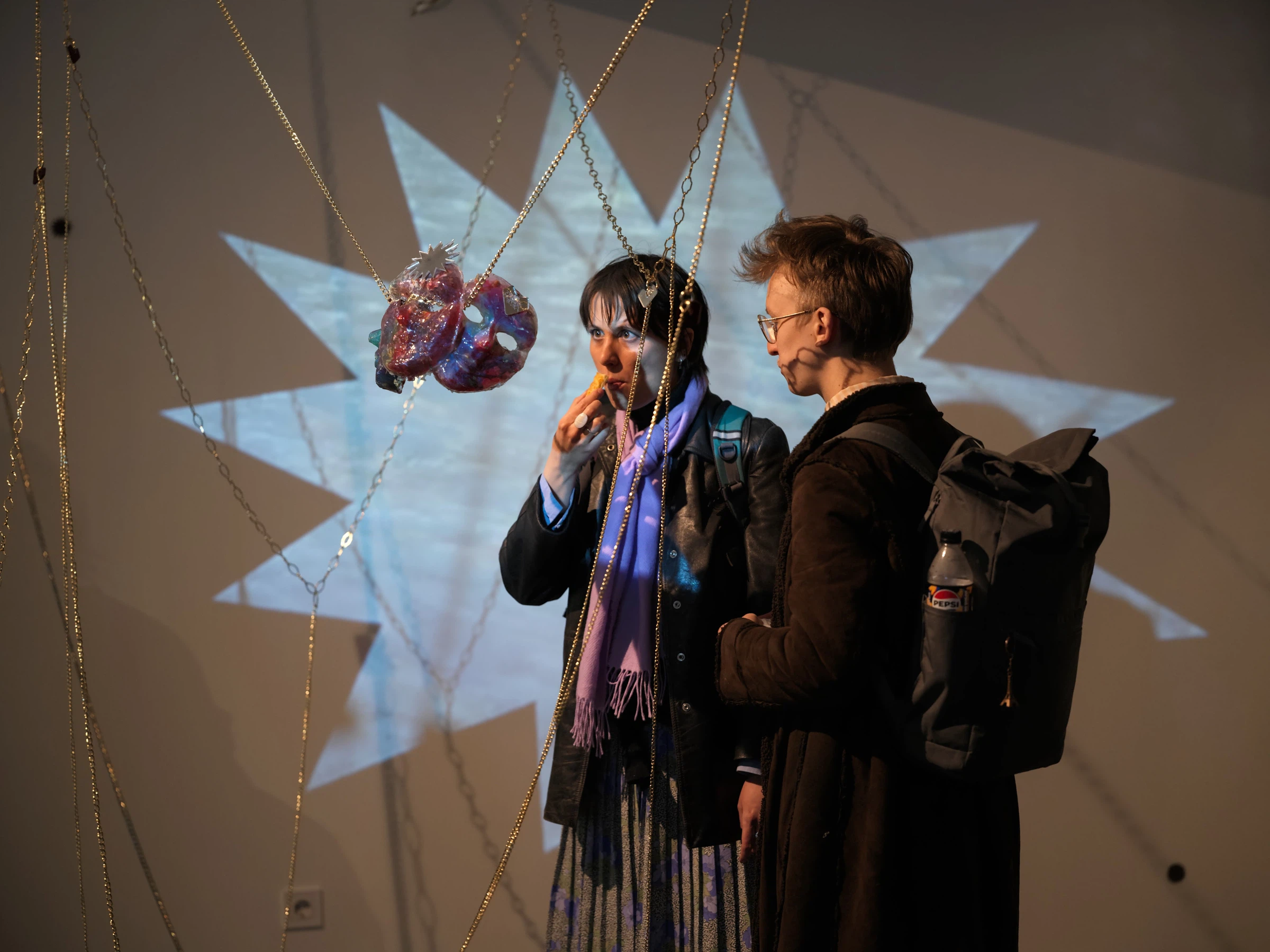
In 1999, a gallery opened on Madách Imre út. The stories that began here now reach far beyond the walls of that first space.
A cultural workshop grew around Godot, giving rise to stage initiatives, creative communities and new institutions. The beginnings of Dumaszínház and the establishment of Godot Intézet are two defining chapters in this story.
Their influence is also felt in the city’s everyday life: in evenings organised around performances, in families’ shared theatre experiences, and in conversations sparked by exhibitions. Godot’s story is a story of places and people — and of the work that turns an initiative into a lasting cultural presence.
1999Madách Imre út 8.
An address where stories began
It began with the gallery.
Godot Galéria was founded by Sáfár Zoltán and Kaucsek Bálint in 1999 at Madách Imre út 8. They created a place where contemporary art could become part of everyday city life.
A gallery’s story is written not only by its exhibitions, but also by its long-term collaborations. The artists who return, the collectors who remember their first purchase, the conversations at exhibition openings. This personal attention remains the foundation of Godot’s present-day scale.
2004The first evenings: 2003 · Regular operation: 2004
02 / Dumaszínház · Starting out at Godot Kávéház
A small stage. A nationwide impact.
One of the most influential initiatives in Godot’s history is now an independent, widely recognised institution in Hungarian cultural life.
Dumaszínház began at Godot Kávéház. Its founders, Litkai Gergely, Sáfár Zoltán and Ardai Tamás, created an environment where young comedians could connect directly with an audience, with nothing but a microphone. The intimacy of those early evenings gave rise to a new performance culture and a new audience.
The early careers of Kőhalmi Zoltán, Bödőcs Tibor, Kovács András Péter (KAP), Dombóvári István, Aranyosi Péter and Kiss Ádám are also linked to Godot’s stage. Behind these names, which later became known nationwide, were opportunities to make their debut, regular performances and a creative workshop process that evolved together with the audience.
Dumaszínház has since followed its own path as an institution. This is precisely what reveals the significance of those shared beginnings: what found a home here grew far beyond the original stage and left a lasting mark on Hungarian entertainment culture.
2013The year it began, based on the 2018 report covering five years of operation
03 / Dumaszínház Gyerekhajó
The very first experiences of theatre.
Artistic director and director Pille Tamás played a defining role in the artistic work of Dumaszínház Gyerekhajó. Created for children and families, the theatre opened up a route to new audiences for Godot’s cultural workshop.
Dumaszínház Gyerekhajó reached young audiences through fairy-tale performances, music and puppetry. The project, which also staged performances aboard the TRIP boat on the Danube, offered a different kind of encounter with theatre: the stories were accompanied by the experience of a distinctive urban setting.
The repertoire included Pinokkió and Keménykalap és krumpliorr. The latter was a joint production with Csukás Színház in Balatonszárszó, directed by Magács László; in Pinokkió, Szacsvay László played Dzsepettó.
Gyerekhajó is a distinct chapter in Godot’s history that has now come to a close. The performances created for young audiences carried forward the same ambition: to create opportunities for personal encounters with culture, starting with the very first experiences of theatre.
2016The beginnings of Godot Art Expo
04 / Godot Art Expo · Since 2016
Godot Art Expo. Giving a generation space.
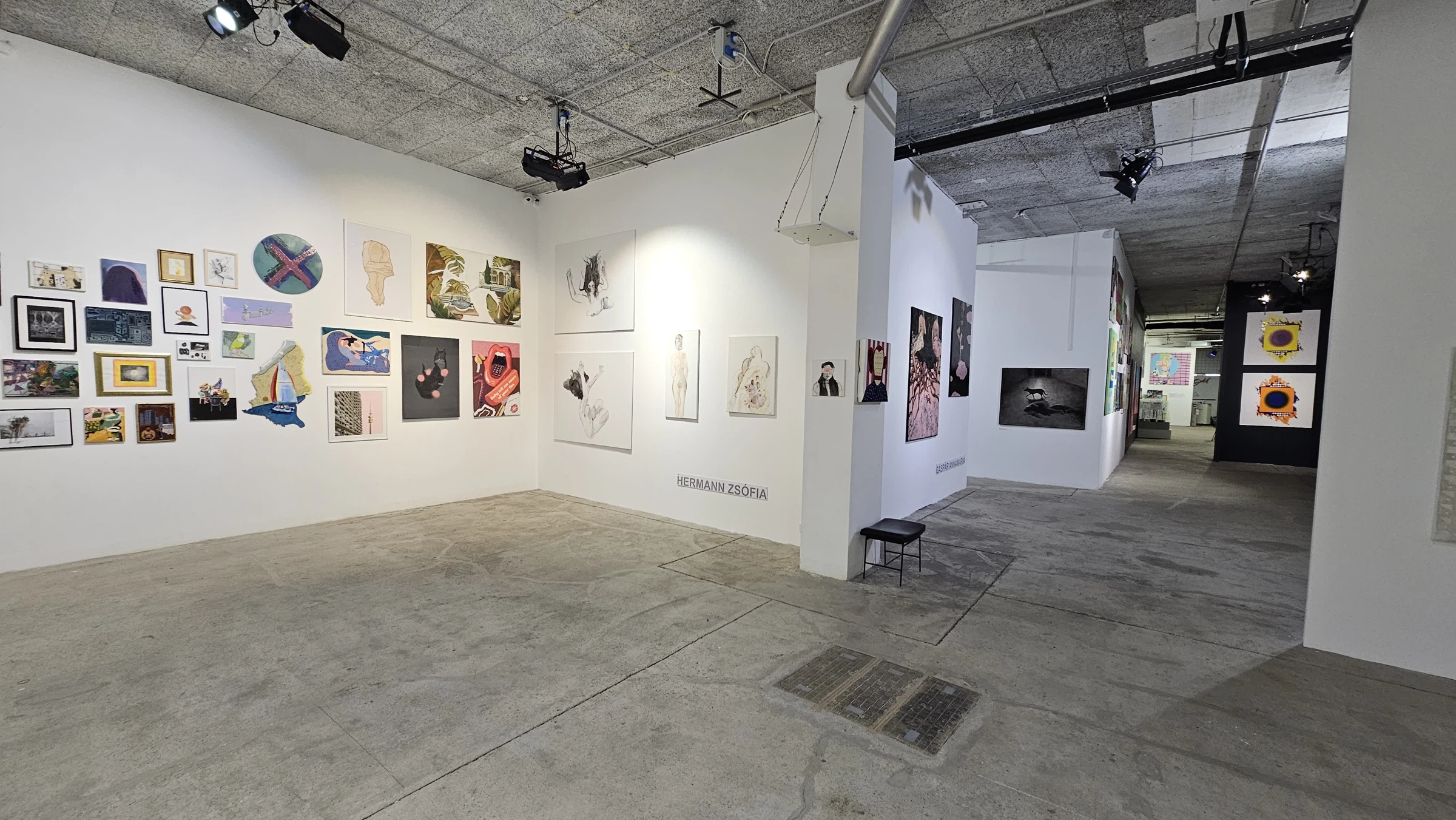
From the pop-up initiative in 2016, through Young Generation Art Fair to Godot Art Expo, a platform for showcasing artists has taken shape, entering its eleventh year in 2026. Many young artists have had, and continue to have, the opportunity here to present their work to a wider audience, meet collectors and build professional relationships.
The Expo makes room for an important step at the start of an artistic career: when works created in the studio are first presented to a wider public. The collaboration launched in 2025 with the Hungarian University of Fine Arts’ Jumpstart programme strengthens this work, creating a link between university education and an independent artistic career.
Encounters can continue after the exhibition, too. byGodot carries the connection between artworks and collectors forward online, while ARTCRUSH opens a path to contemporary art through playful discovery.
The story of the Godot Institute began long before it opened. Sáfár Zoltán and Laczkovich Borbála had been working since 2014 to establish a larger-scale contemporary art institution. The idea found a home in 2019 in the former Goldberger factory, where the Godot Contemporary Art Institute and the Godot Labor Gallery opened. As co-founder, curator and artistic director, Borbála shaped the Institute’s artistic profile.
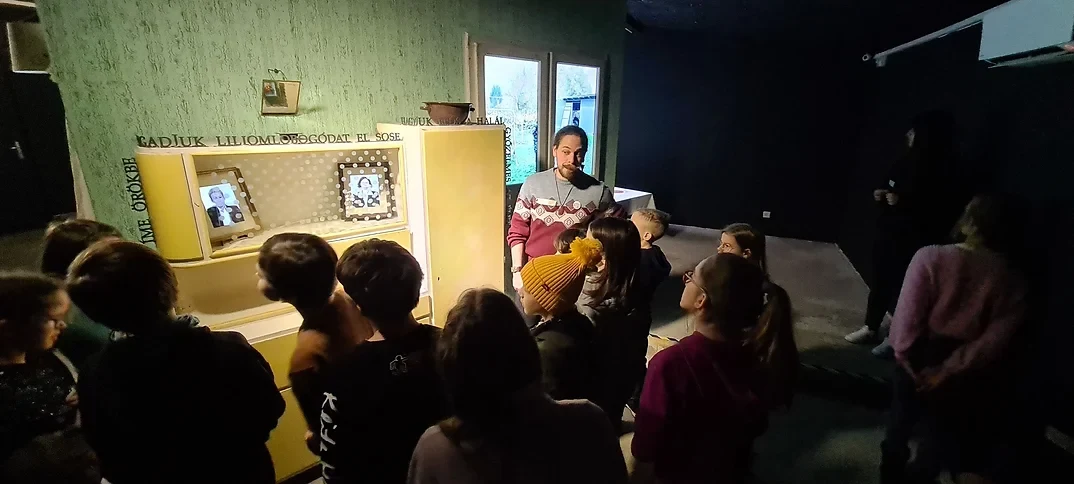
The Institute allows an artistic idea to unfold across several rooms, revealing its connections. The works respond to one another, the space becomes part of the experience, and visitors can spend time immersed in an artistic world.
Alongside exhibitions on a museum scale, the workshop’s direct, personal atmosphere remains. The Labor provides space for young artists and experimental projects; the Institute and the Gallery connect different bodies of work, generations and audiences.
Exhibitions that took the story forward.
With the opening of the Institute, the creative workshop’s work continued through large-scale exhibitions. Distinct artistic worlds, new audiences and international connections show what the new institution made possible.
The Art of Banksy
The 2020 presentation in Budapest took place at Tesla Loft through a collaboration between the Godot Institute of Contemporary Art and TulipánTündér. The project brought new audiences into contact with visual art beyond Godot’s own exhibition spaces.
Bukta Imre: Let Us Cultivate Our Gardens
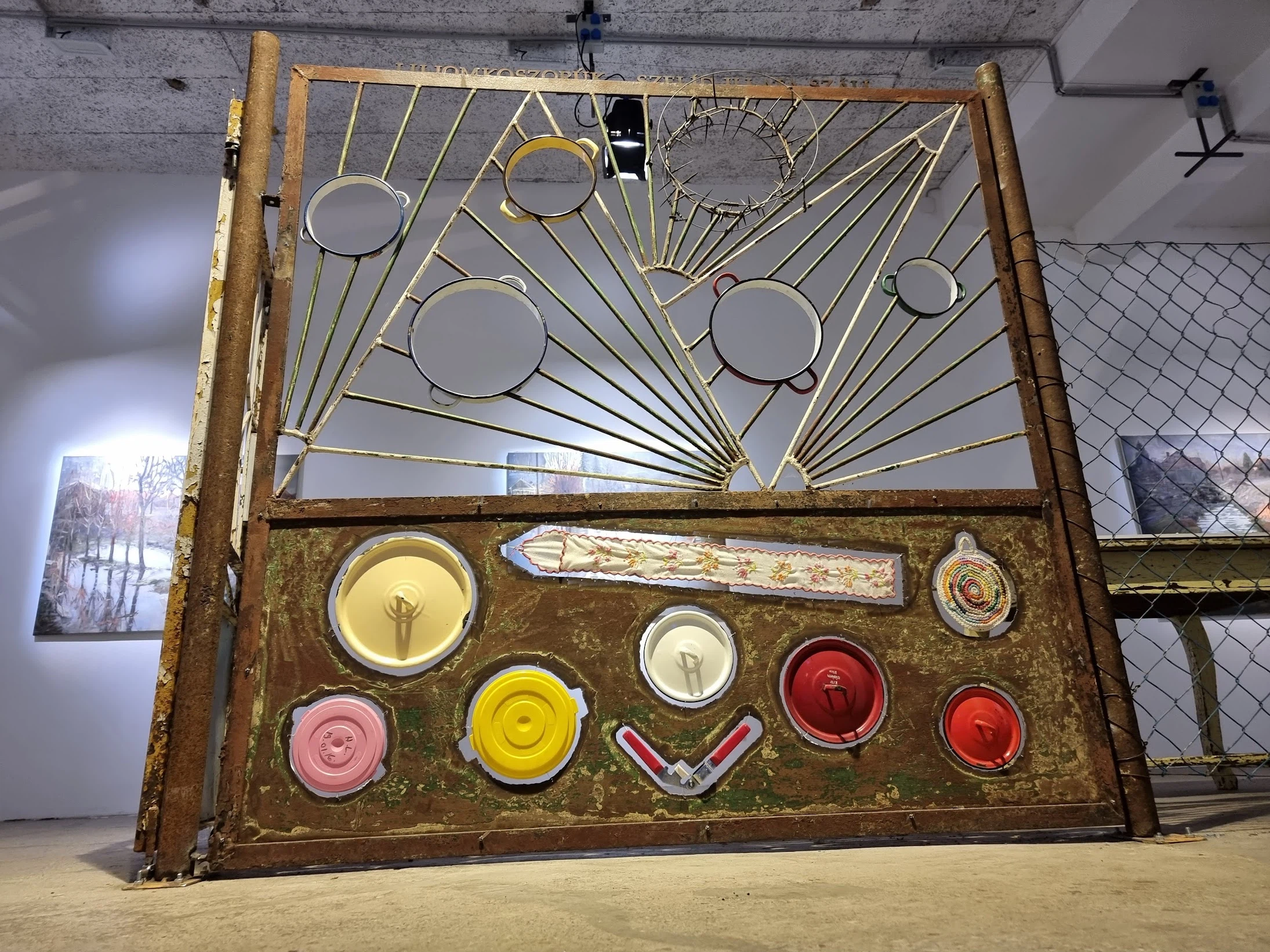
The 2022–2023 exhibition gave space to Bukta Imre’s artistic world. Together, the paintings and installations unfolded a complex picture of rural life, memory and social experience at the Institute.
Szüts Miklós and Vojnich Erzsébet
Two distinct bodies of painting entered into dialogue in this joint exhibition. The space, silence and structure of the paintings made room for sustained attention: an encounter in which the viewer’s own experience also finds a place alongside the works.
From Godot to the Venice Biennale
Koronczi Endre’s exhibition Please Sigh, Mr Széchenyi! was realised at the Godot Institute in 2024 with the involvement of Cserhalmi Luca, the Institute’s curator at the time. The works shown here and their collaborative work formed the basis of the Pneuma Cosmic proposal, which won the opportunity to exhibit at the Hungarian Pavilion of the 2026 Venice Art Biennale.
This story shows what it means for Godot to be a creative workshop: providing space, professional input and practical support for an idea that can go on to reach the international stage.
drMáriás: Long Live the Dictatorship!
The anniversary retrospective brought together several periods of the artist’s career. Alongside satire on public life, experiments in painting and personal stories also featured, revealing the complex artistic journey behind the widely recognised visual world.
Time and space to create. Without borders.
Godot’s international residency programme, which remains active today, supports artistic work beyond providing an opportunity to exhibit. A change of environment, time to focus and new professional connections can lay the groundwork for the next chapter in an artist’s career.
Val-d’Aigoual · France
The Mentőcsónak scholarship provides an artist residency in a château in southern France. The programme also includes a solo exhibition opportunity and mentoring organised by Godot.
The Hague · The Netherlands
The professional residency offered in collaboration with NGO Dei gives artists opportunities to forge new international connections.
Marrakesh · Morocco
Made possible by Gauder Alkotóház and hosted at Riad Al Massarah, the residency offers an opportunity to explore a different cultural environment and the creative experiences that emerge from it.
Residencies are awarded through a professional selection process; current opportunities and conditions are set out in Godot’s open calls.
Between the major chapters
A workshop’s influence reaches in many directions.
The institutions are connected by decades of day-to-day cultural work. Smaller initiatives, collaborations and new encounters give the story its richness.
Telep
Godot also helped establish Telep Gallery, supporting the beginnings of a new, independent cultural scene.
Literature and improvisation
Many dozens of literary evenings and improvisational theatre events brought new voices and audiences into Godot’s orbit.
Mezőszemere
Work at the artists’ colony made room for creative practice, time spent together and long-term professional relationships.
From a personal cause to a shared endeavour
An institution has a face, too.
Behind places and initiatives are people. Artistic decisions, organisation, financial support, decades-long relationships: Godot is built on all of these working together.
The people behind Godot
Founders and leadership
Founders
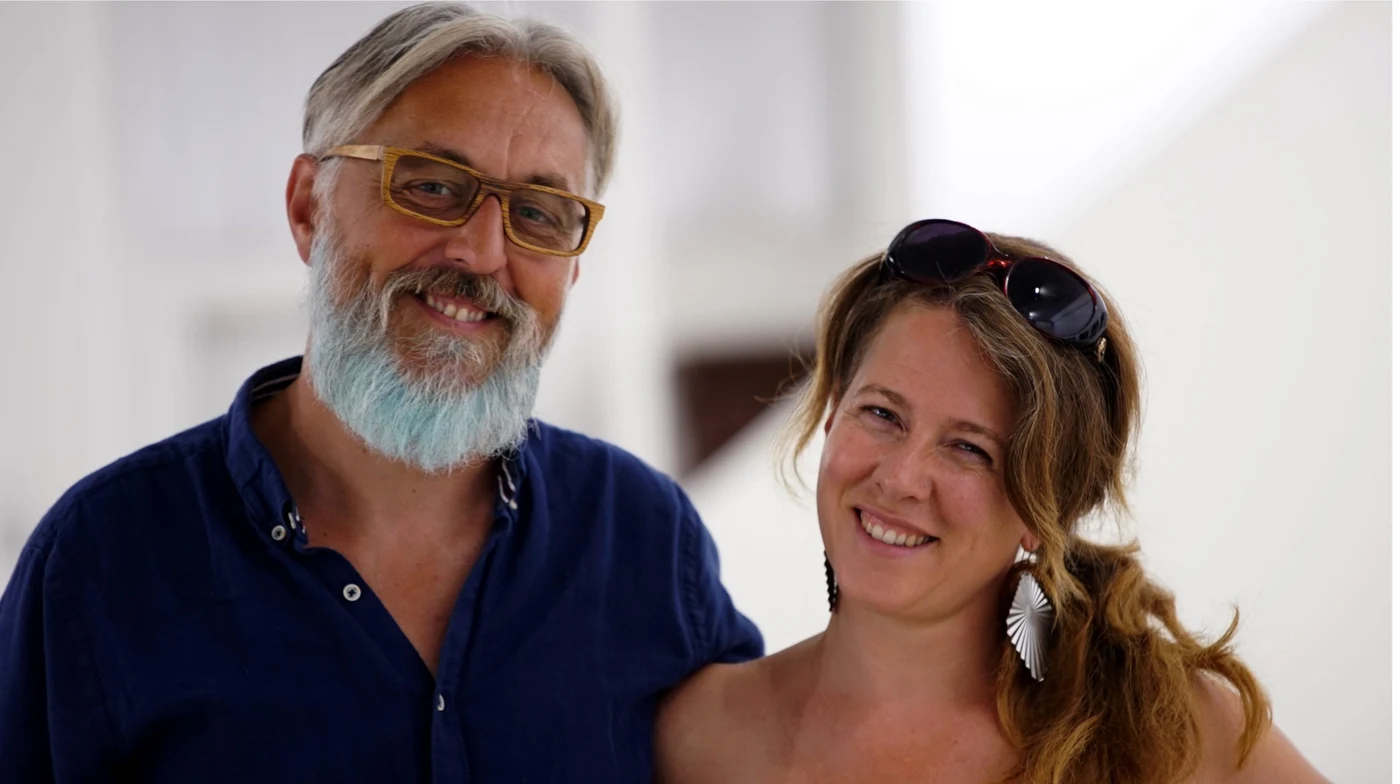
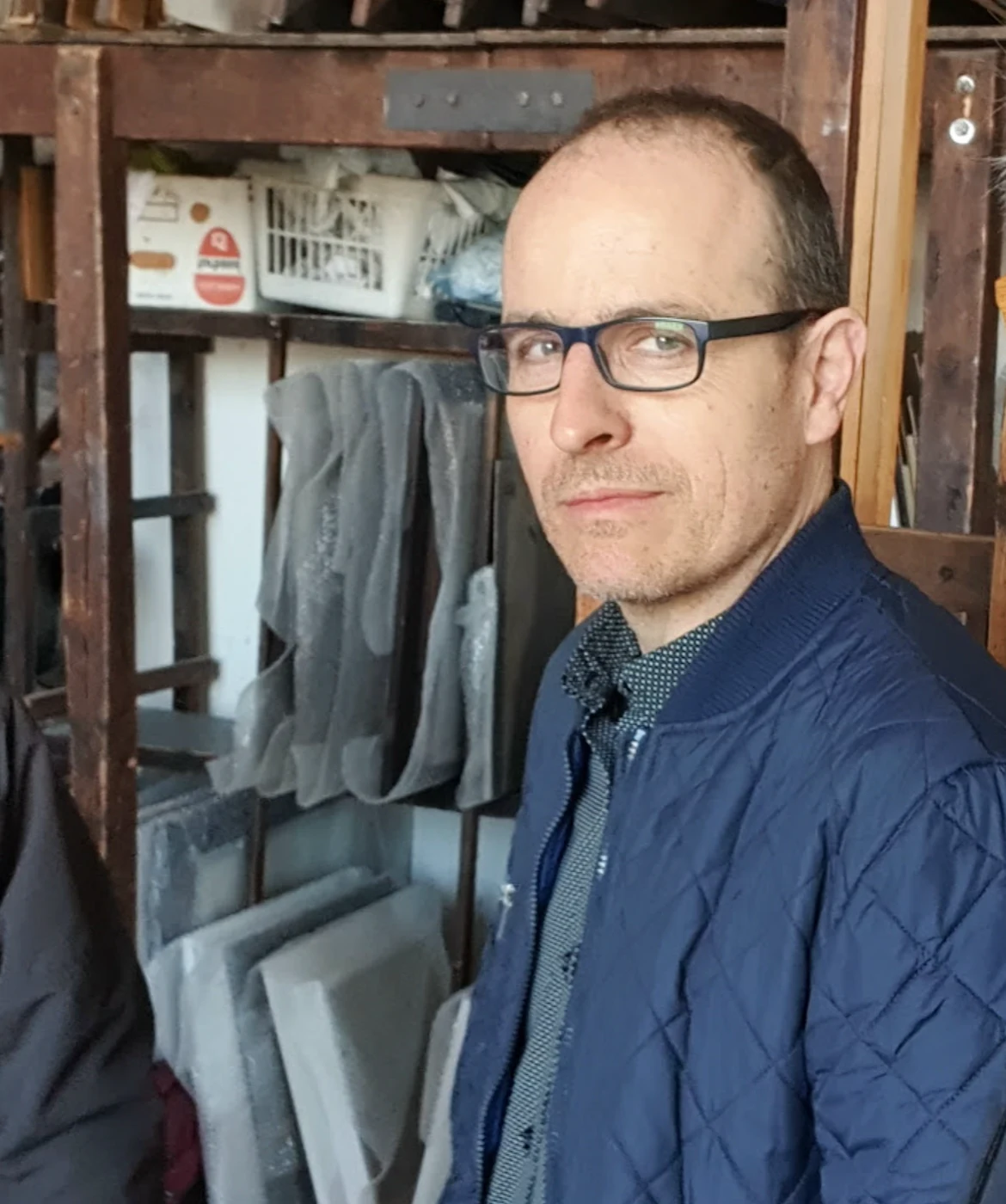
Sáfár Zoltán and Laczkovich Borbála
Sáfár Zoltán
Founder of Godot Galéria and Godot Intézet
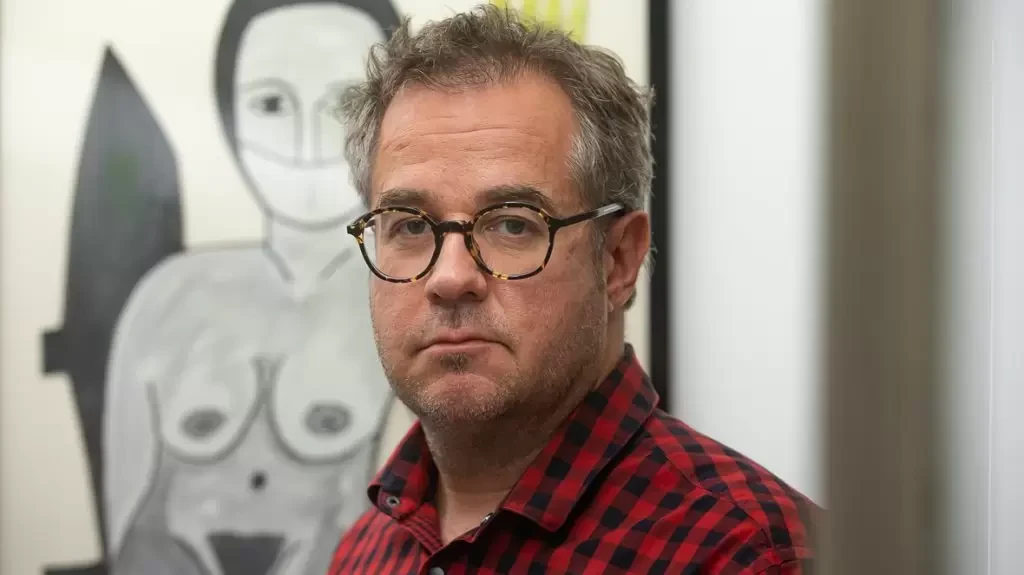
Laczkovich Borbála
Co-founder, curator and artistic director of the Institute · Art historian
Their work together is united by a love of art and culture, and a belief in art’s role in building communities. They create an environment that makes room for both creative freedom and personal encounters.
Co-founder of Godot Galéria · Head of Finance
Kaucsek Bálint
As co-founder of Godot Galéria and Godot Intézet, they work to secure the financial resources behind their operations. Their role is to create a stable foundation for bringing artistic ideas to life and supporting the institution’s development.
Deputy Director of the Institute · Curator
Lukács Gergő
Supports the day-to-day running of Godot Intézet and the coordination of its artistic work. As deputy director and curator, they work at the intersection of exhibitions’ curatorial direction and their realisation.
Gallery Director · Art collector
Kozák Gábor
Has led Godot Galéria since 2000. As a gallery director and art collector, they build long-term relationships with contemporary artists and collectors; their work centres on presenting artworks and fostering artistic dialogue.
Godot today / Three exhibition spaces · Two Budapest addresses
Let’s meet in person.
Godot Institute
Large-scale exhibitions in the former Goldberger factory.
1036 Budapest Fényes Adolf utca 21.
Godot Labor Gallery
Young artists, experimental projects, ideas taking shape.
1036 Budapest Fényes Adolf utca 21.
Godot Galéria
Founded in 1999, the gallery is now on Bartók Béla út.