The contemporary art world is a closed club. Godot has been opening its doors for 26 years.
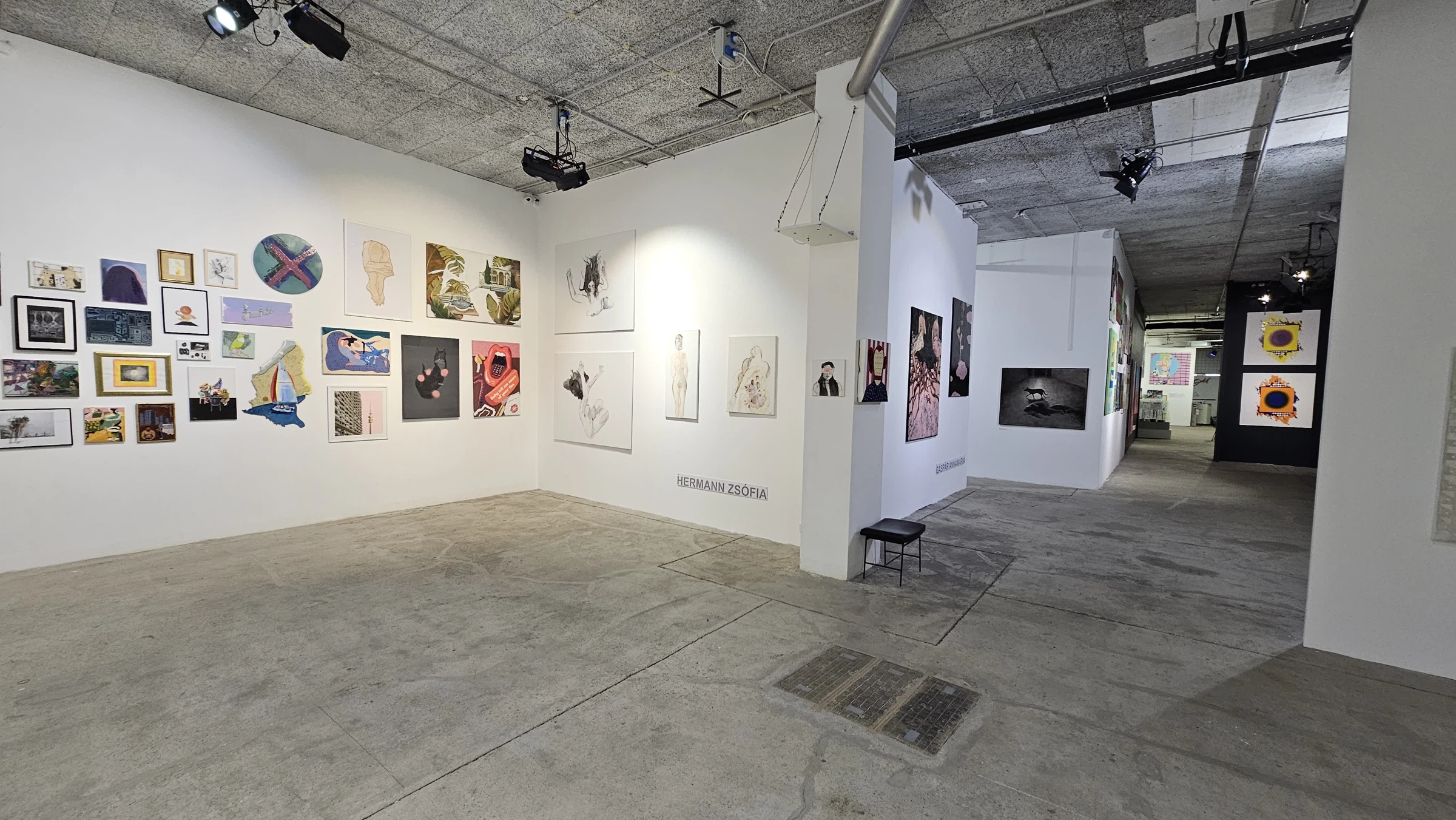
The art system often demands a professional background from those who have not yet had the chance to build one.
The Godot Art Expo was created so that it would not just be for those who are already inside.
Therefore the application deadline for the 11th Godot Art Expo has been extended by one week, We will extend until 26 July 2026.
The contemporary art world likes to talk about itself as if only the quality of the works mattered.
As if talent were to reveal itself eventually on its own. As if fine art certainly would find its audience. As if the same doors stood before every creator, and one simply had to knock on them with enough persistence.
But these doors are often not even visible.
Sometimes they pop up, but they’re closed. And often the question isn’t just what you’ve created, but also where you trained, who knows you, who recommended you, which gallery you belong to, where you’ve exhibited before, and which institution has previously said you’re worth keeping an eye on.
This is one of the biggest contradictions in contemporary art.
Have a professional CV before you get the chance to build one.
Have exhibition experience before you can exhibit.
Build your connections before you can enter the spaces where they are formed.
Be visible before someone points you out.
And if possible, accomplish all this quietly, elegantly and at your own expense.
It is not a lack of talent – it is a lack of genuine opportunities.
In Hungary, many people create.
There are people who studied at an art university, and others who have reached their creative careers through different routes. Some are early‑career artists, some are restarting, some begin later in life, some work out of the countryside, some create alone, some lack a studio, and there are also those who have been steadily building a body of work for years but have yet to be introduced to the professional public.
Because the system has not yet recognised someone, their work will not become any less existent.
Even without a degree, his artistic thinking can still be valid.
Even without gallery representation one can still be a consistent and serious creator.
Even if you lack influential contacts, there's still a place in contemporary art.
The problem isn’t that everyone should automatically be declared an artist. Professional decisions, curation and quality criteria certainly have their place.
The problem is that some people never even get the chance to present themselves, because they lack the connections, institutional or social background that would allow their work to reach those in decision‑making positions.
Professional quality is not the same as exclusivity.
Selection is not the same as inclusion.
Protecting quality should not mean that the same people are always praised.
We are not asking who was admitted earlier.
No fine‑arts diploma is required to apply to the Godot Art Expo.
No gallery representation required.
No institutional recommendation required.
There's no need to know the organisers.
You no longer have to be part of the art system to have a chance of gaining entry.
We select the submitted works on the basis of professional criteria. We do not guarantee that every applicant can exhibit. However, we do guarantee that every valid application will be considered in the same professional selection process.
The possibility of applying is not determined by where the artist comes from, where they studied, whom they know, or how well known they already are.
This is not a gesture for us.
It's not a one-off campaign.
It is not a fashionable statement about openness.
This is one of the foundations of our operation.
Eleven Art Expo. Several hundred artists. Twenty‑six years.
Godot has been working in Hungarian contemporary art for 26 years.
During this time we not only organised exhibitions, but also built an audience, worked with artists, shepherded careers, presented artworks, and forged new connections between creators, viewers, collectors, curators and institutions.
The current edition is already the 11th Godot Art Expo.
During recent exhibitions, several hundred artists have had the opportunity to be showcased in a large‑scale, professional exhibition environment.
Not on a studio wall.
Not in an open online folder.
Not a social media site where posts disappear quickly.
But in a real space, among real works, before a real audience.
The Godot Art Expo doesn’t squeeze in just a handful of works into a symbolic group show. We do it on a large scale because we take it seriously.
Artists are not merely the backdrop of an event. They are the event itself.
Admission, of course, does not automatically mean success. We cannot promise a career, sales, a gallery contract or an institutional invitation.
But we are creating a situation where this could all happen.
Because on an artistic career a single genuine appearance can sometimes separate invisibility from the point at which a name is finally remembered.
An exhibition.
A Meeting
A conversation.
A purchase.
A curator's attention.
A following invitation.
One sentence:
Take a look at this artist.
The system is also built on connections. There's no point in denying that. The question is whether only a narrow circle can access these connections, or whether it is possible to create open situations into which new creators can also enter.
What do we believe in the latter part?
We are not hosting a talent search.
We also dislike the phrase “talent scout” because it implies that talent must be discovered, approved and authorised from above.
It's as if the artist didn’t exist until an institution declared them to exist.
The Godot Art Expo does not produce artists.
It does not grant artistic licence.
It does not name the one who has not yet been there.
The Godot Art Expo creates an opportunity for exposure. It places those works and artists that the professional selection deems worthy in a visible, professional context.
We don't give the artist value.
We create space so that this value may meet the audience.
A diploma can be important, but it is not an admission ticket to the whole art world.
Art education can provide knowledge, a workshop, professional connections and critical proximity. All of this is important and valuable.
However, the absence of a diploma cannot automatically be taken to mean exclusion from the artistic public sphere.
The history of art is not organised so that every significant creator follows the same institutional path. Art can change precisely because, from time to time, it is voiced by those who do not follow the already determinate route.
An open artistic culture is not tasked with erasing professional benchmarks.
Its job is to avoid confusing the professional standard with the social and networking privileges that come with entry.
Contemporary art cannot belong only to those who already possess its language, its relationships and its spaces.
The insularity of the art world is not just a problem for artists.
If the same circles always pick from the same circles, over time art itself will become poorer.
Fewer experiences appear.
Less social background.
Less new sound.
Less risk.
Fewer surprises
An open entry system is not charity. It is not a lowering of standards. It is not surrendering professionalism.
It is, instead, the recognition that value does not always manifest itself where the system has been accustomed to look.
Therefore we consider the open call important.
And so we are organising it again, now for the eleventh time, the Godot Art Expo.
We are extending the application deadline by one week.
The original application deadline was 19 July 2026.
We have decided to extend the application deadline by one week.
The new application deadline: 26 July 2026.
We are giving more time so that those who were previously uncertain about whether they had a place at such an exhibition can also compile and submit their application.
There is.
No guaranteed space on the wall.
Rather, it is a real place among the applicants.
No need to seek permission from the system that may not have noticed it until now.
There’s no need to prove that someone is already well‑known enough to get the chance to become famous.
The works need to be displayed.
It must be shown where the artist stands.
The professional selectors then decide based on these.
The contemporary art world is a closed club. But not all doors have to remain shut.
Godot has not been commenting on this system from outside for 26 years.
We're working on it.
We know its strengths, its flaws, its protagonists, and its blind spots.
We know that a single Art Expo will not transform the whole Hungarian art world. It does not solve the livelihood problems of artists, it does not create a self‑sustaining market for art objects on its own, and it does not erase institutional inequalities.
But it creates a real entrance.
For creators who don’t have their own key to the closed club.
We have been opening this door for 26 years.
It is now open again.
Application deadline: 26 July 2026.