It is not enough to ask for reform. One must organise. The call to the GODOT INTÉZET.
Update
After the announcement appeared, many said that they view greater professional self‑organisation of the contemporary visual‑arts scene as important, and they would gladly take part in the continuation.
For that reason the first open technical and communication interface was created:
The page does not represent an existing organisation, nor an association, nor a pre‑designated leadership. The ugye.hu First workspace: a questionnaire, a subscription option and with the aim that the next steps can be shaped together by those involved.
Survey and subscription:https://ugye.hu
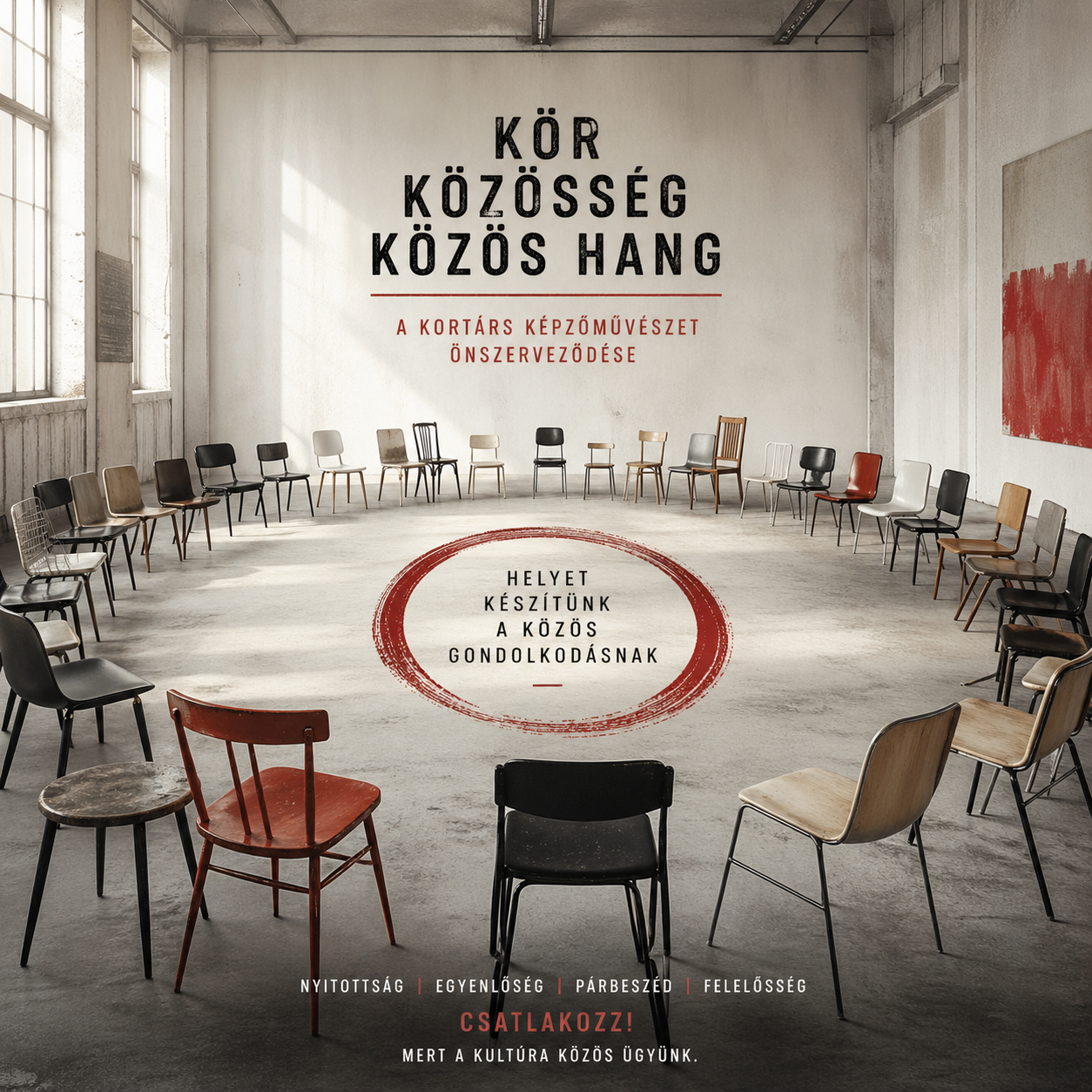
The Godot Contemporary Art Institute’s appeal for self‑organisation of the contemporary visual arts scene
In recent days, significant professional debates and statements have emerged about the future of Hungarian contemporary visual art. These are necessary and timely texts, addressing institutional autonomy, the reform of NKA, the situation of the Műcsarnok, support for independent venues, artistic career paths, education, critical public discourse, decentralisation, and international presence.
According to the Godot Contemporary Art Institution, however, the reform proposals by themselves are not sufficient. In order for them to become a genuine force, the contemporary visual arts scene also needs a broad, bottom‑up democratic self‑organisation.
Since the change of regime no shared professional forum or representative body has emerged that could consistently and with wide authority represent the problems, needs and minimum requirements of the contemporary art community. There were important professional circles, institutions, civil initiatives and individual statements, but the open space where the whole scene could discuss its own future never materialised.
We are at a historic moment. The new political situation could create an opportunity for cultural policy to become more open and professional. But this can only lead to lasting change if the industry itself is able to organise its own collective voice.
No single institution, gallery, professional circle or individual can speak permanently on behalf of the whole scene. This requires an open, participatory and democratic process: a joint situation assessment, dialogue, forums, and then a representation form determined by the participants.
The Godot Institute is therefore urging extensive professional self‑organisation, and is ready to provide practical support to launch the process. We would provide space for professional discussions, forums and preparatory meetings, and, to the extent of our resources, we would also offer IT, communications and organisational help to establish a joint situational analysis and self‑organisation process.
We do not see this as a one‑off gesture, but as a commitment. We are convinced that establishing such an arrangement is one of the most pressing tasks facing the contemporary visual‑arts community. We are ready to work consistently to set this process in motion, make it visible, and make it as accessible as possible to as many participants as possible.
We are not proposing this for the purpose of having the Godot Institute represent the scene, or to establish its own organisation in place of the profession. Instead, the aim is that decisions, the organisational form, the mode of representation, and the rules of operation arise from the joint decisions of the participating community.
The future of contemporary visual art is not only an institutional and financial issue. Shared professional responsibility.
Now it's no longer enough to ask for reform.
You must organise yourself.
Godot Contemporary Art Institute
Budapest, 2026