The second glance
Discovering ARTCRUSH and contemporary art: from first impression to a personal meeting
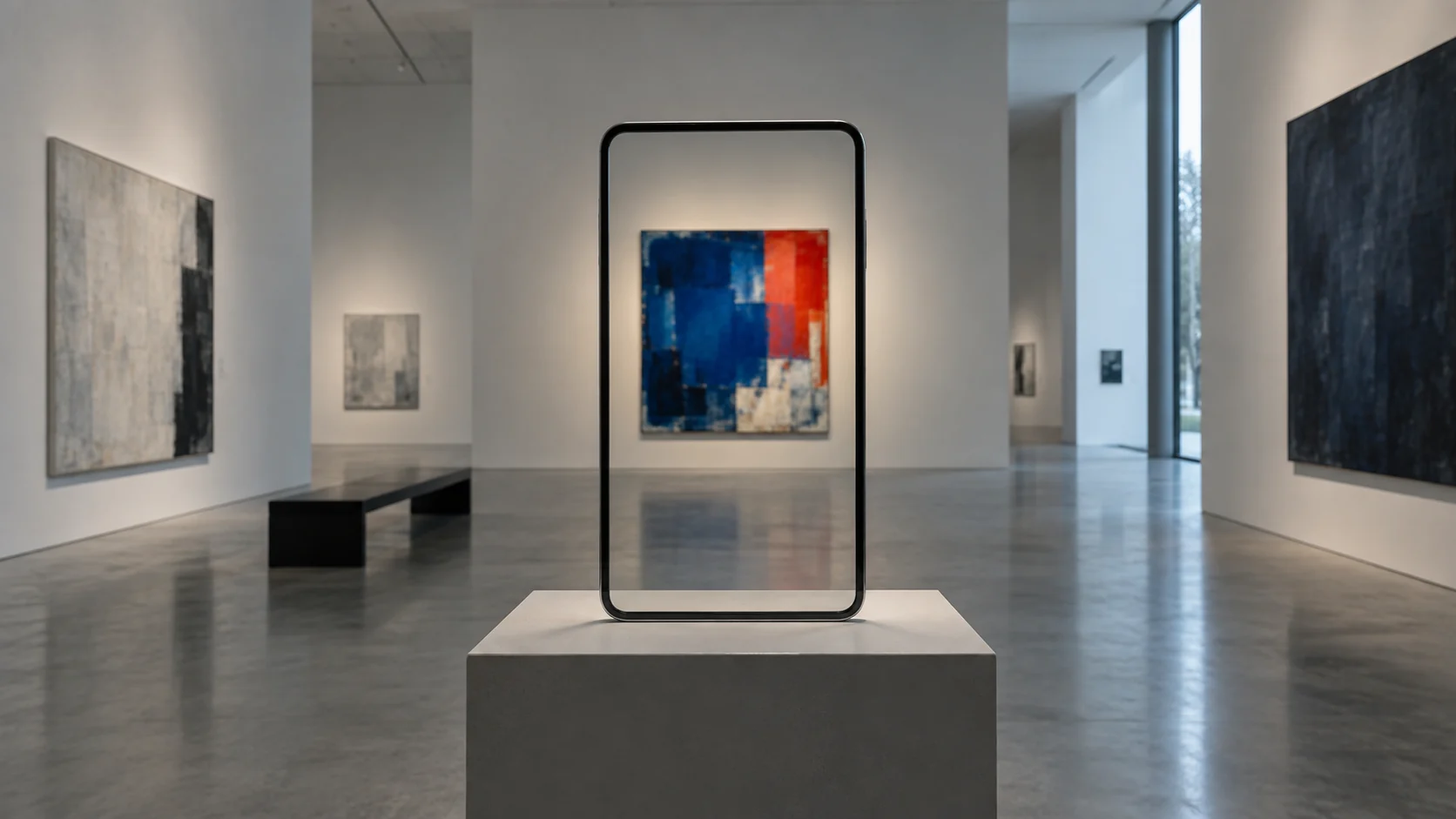
ARTCRUSH is a free, registration‑free contemporary art game offered by the Godot Institute. It does not open with an art‑history explanation, but with a single question: Did the artwork catch you?
This simple rearrangement of priorities is more important than it first appears. Prior to contemporary art, many people already become uncertain even before they actually see what lies before them. Should I know the creator? Should I understand the work? Should I know its value? ARTCRUSH first puts those questions aside, giving time to a personal reaction.
A digital game, of course, is not a museum‑pedagogical activity, and the screen is not an exhibition space. Yet it is worth taking seriously the situation it creates: the artwork precedes any knowledge about it for a few moments.
The moment before the name
The artist’s name, the title and the price form a strong interpretive framework. They may help in understanding, but they can also shape the first impression. A recognised name lends authority, the price suggests a hierarchy, and the title can indicate a meaning even before the viewer’s own observations have developed.
In ARTCRUSH the image itself is displayed first. The choice is personal, and no interpretation is prescribed. This does not render knowledge superfluous. On the contrary, it creates an opportunity for the information to connect with an already established curiosity.
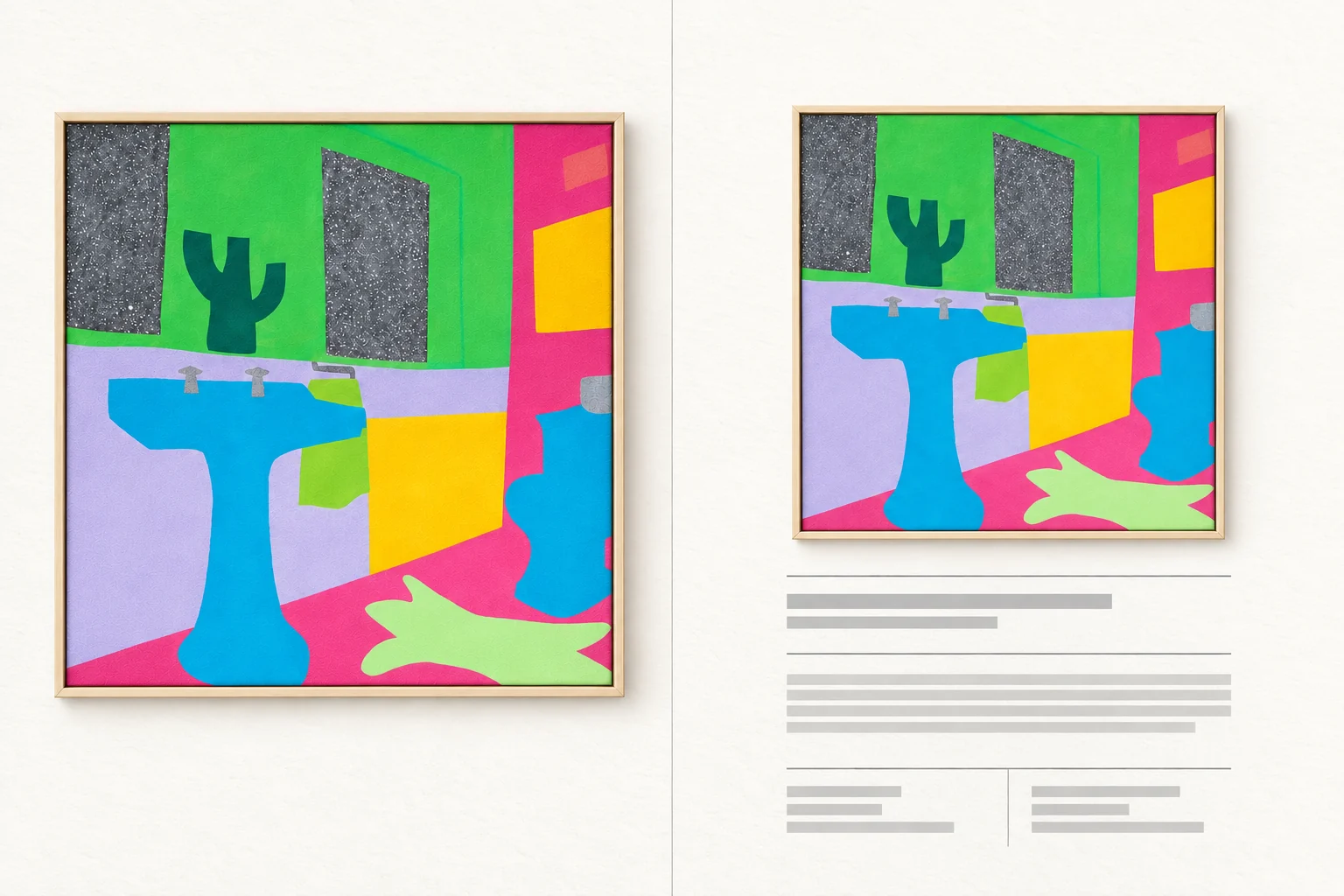
Choice is not an evaluation.
Impressions are not the same as artistic value. A quick choice does not tell you whether a piece is significant, nor will it tell you whether we will react to it in the same way later. The pedagogical potential of the game does not lie in pulling to the right or left, but in what may happen afterwards.
A favourite piece can be reopened in your own collection; there you will find the artist’s name, the work’s details and its price. You don’t have to wait for a CRUSH to develop. CRUSH is a separate feedback indicator, signalling sustained interest—for example, if someone returns to the same piece multiple times. The journey to getting to know a work, however, starts right after the first “like.”
In this return there is one of the most important opportunities. The first reaction is instinctive; the second glance already compares, remembers and asks. Why did this image remain in me? Its colour, its subject, its tension or something I cannot yet name?
Your own selection as a self‑knowledge platform
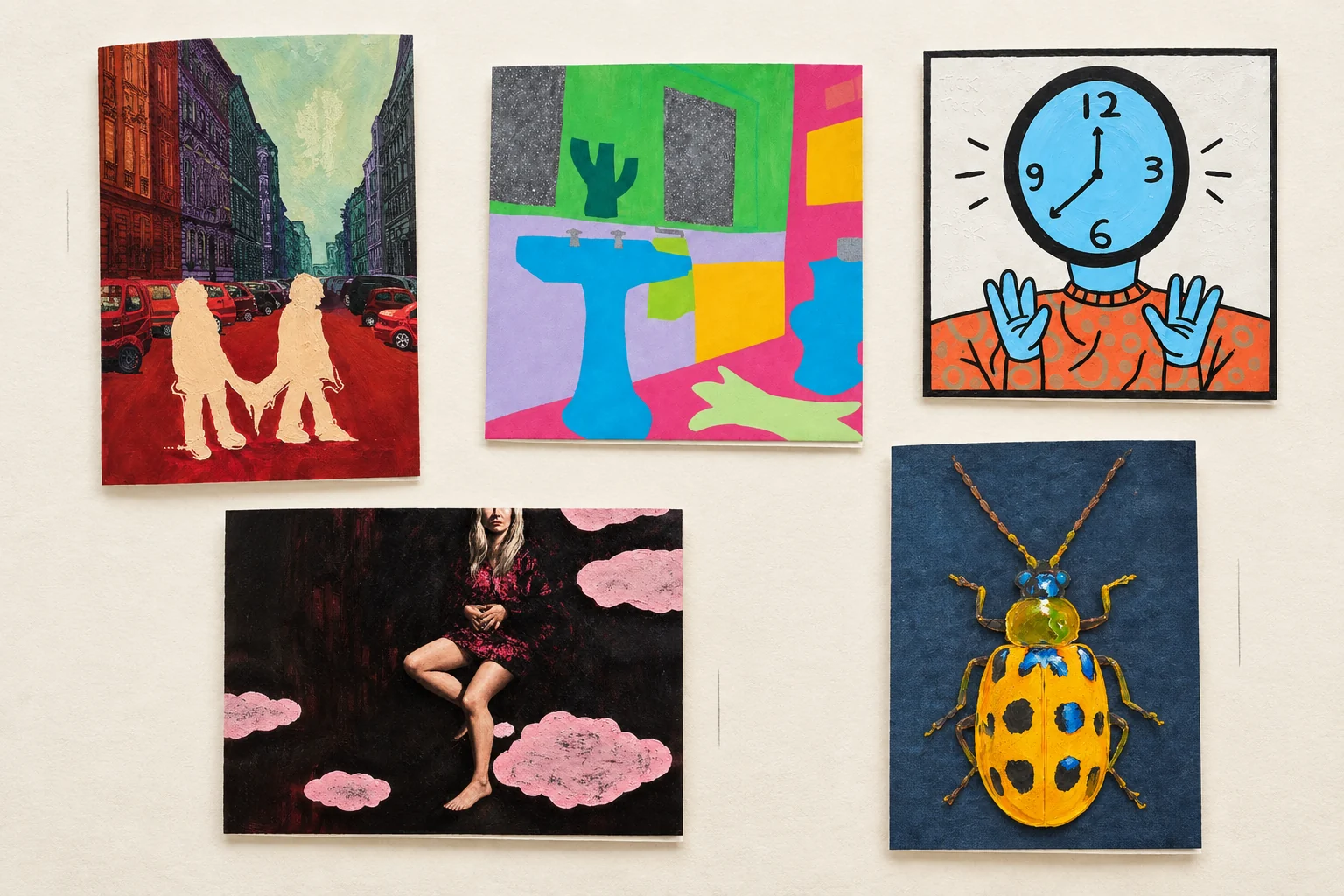
The works seen one after another are fragments in and of themselves. In the personal selection, however, they come into contact with one another. Repeating colours, shapes, themes and moods can become apparent. The participant does not receive a ready‑made taste profile, but rather material to recognise the patterns in their own choices.
After evaluating fifty different works, the Similar function can also search for visually related pieces based on your own picture or photograph. This becomes interesting when it does not give a final answer as to what suits you but opens up new directions. The recommendation serves learning when it broadens the viewer’s focus, rather than locking them into already familiar preferences.
What does gamification offer – and what doesn’t?
Play can relieve the “I don’t understand it” anxiety and can connect you with a wide range of visual worlds. Even frequent encounters matter: someone who has seen fifty or a hundred works starts from a larger pool of comparison material than someone who tries, based on a single painting, to decide whether contemporary art has a place for them.
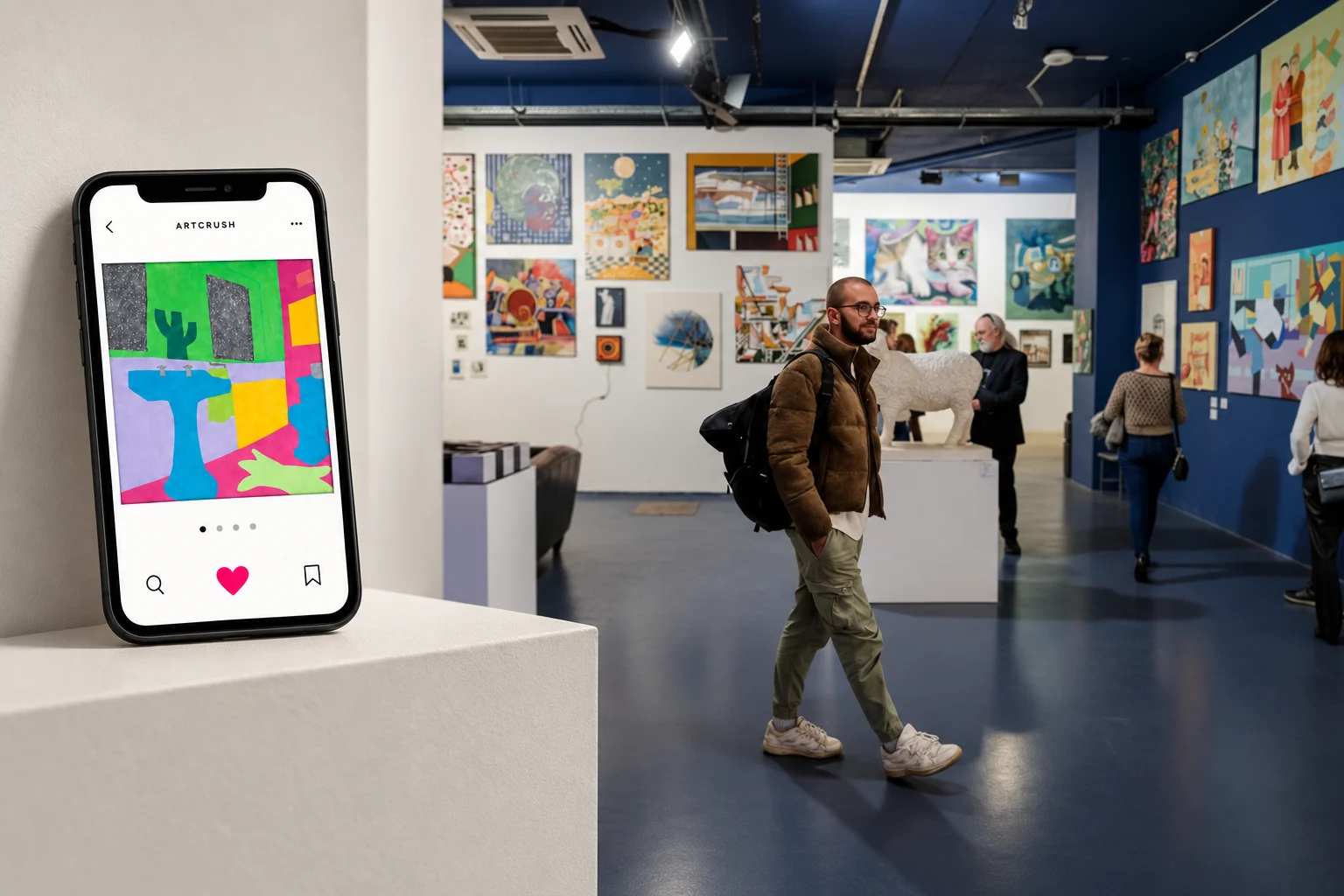
After a hundred reviews, the «Nézd meg a faladon» feature can also show the appropriate works on a compatible device in your own environment. This is not the same as the finished, full‑scale room rendering: one is a digital rehearsal performed in your own space, the other is a pre‑made illustration. Neither replaces the precise dimensional data or a physical viewing of the work.
After evaluating a thousand different works, two weekday Godot Art Expo tickets can be requested. The reward is not an automatically issued ticket but an opportunity to move on to a personal meeting.
It is also worth stating the limit: a thousand quick decisions do not automatically mean a thousand deeper artistic experiences. The amount of attention is not the same as the depth of understanding, and the usage data of the game alone do not prove knowledge acquisition. The educational possibility unfolds when a swift choice is followed by a pause, a re‑view, a search for information, or a conversation.
After the Screen, the Space
Digital reproductions grant access but also lose value. They do not convey precisely the scale, the material, the surface, the framing, the surrounding works, or how the image changes as we move before it. In the gallery space the artwork is not merely a visual impression but an object and a presence.
Therefore Artcrush takes its most compelling role when it does not function as a terminus. The curiosity sparked on the screen can lead you into the exhibition, where the initial reaction may shift, become stronger, or even entirely reverse itself.
Museum Pedagogy Threshold
The museum's task today is no longer only in the preservation and presentation of objects. A Definition of the International Council of Museums It also regards education, experience, reflection and knowledge sharing as part of museum operations. A digital tool becomes truly relevant to this only if it does not merely provide more images but helps one observe, choose, return, and ask.
Based on the joint observation of artworks Visual Thinking Strategies Another method and another situation, but it reminds us of an important principle: the starting point for interpretation may be careful observation, formulating one's own observation, and comparing different perspectives. A Smithsonian's digital teaching practice That, in fact, shows that collection access becomes a learning opportunity when the user can explore, select and create their own connections.
ARTCRUSH does not replace the artwork, the conversation, or the museum pedagogue. It creates a liminal position. It can ease the uncertainty of entry, draw attention to a work, and then hand over its place to further exploration.
The value of ARTCRUSH can be measured by how many choices lead to a rewatch, how many rewatchings spark a question, and how many questions guide the viewer to a real piece of art.