- Dates
- 19 November 2009 – 19 December 2009
- Venue
- Godot Galéria · 1114 Budapest, Bartók Béla út 11–13.
- Press contact
- [email protected]
Short listing
2008 Budapest, Hungary
Full exhibition text
2008 Budapest, Hungary
Godot Gallery cordially invites you.
Krisztina Erdei
For the exhibition titled "Formaságok".
Opening: 2009 November 19th Thursday between 20 and 22.
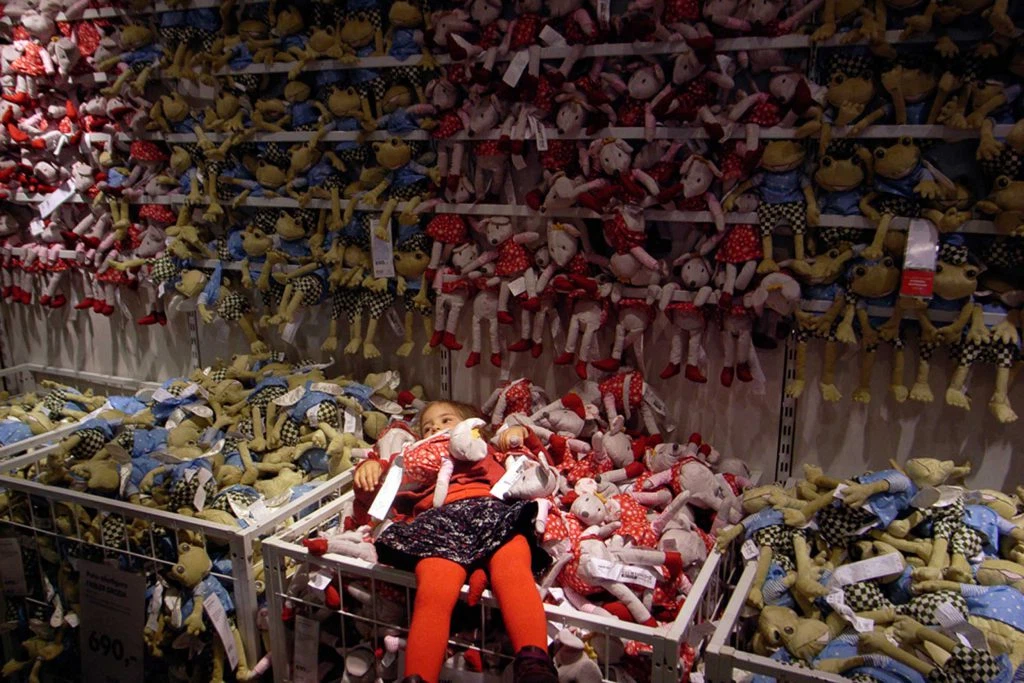
In the gallery we present a selection from the artist’s book, released under a title similar to 2007 (Formaságok), together with the artist’s most recent works thematically linked to it.
The exhibition will be open until December 19, from Tuesday to Friday 10 to 18, and on Saturday between 10 and 13.
2008 – 06 (Szeged, Hungary)
Writings about the artist:
Almost every one of his pictures has a peculiar, rather odd character. It feels as though, while we are viewing an image in its normal setting, another feed is being delivered to us; as if we are uninvitedly being bombarded continuously with spam. His photographs are humorous, but they go too far into the grotesque; they are not quite ironic, more like pseudo‑physical, waking day‑dreams that bypass our ordinary perceptual experience. Of course, many photographs are rooted in reality, yet these manage to draw the viewer’s attention to intriguing relationships, formal analogies and intellectual counterparts. Even more remarkable is the fact that in many cases the very examination and capture of real social, cultural or lifestyle curiosities and anomalies form the basis of the image’s creation. – Készman József
As of 2007.06.11, Nahariyya, Israel.
Erdei Krisztina seems to interpret her life through images. She creates a quasi‑visual diary by exploiting the “unlimited” potential of digital technology when viewed at a human scale, i.e. always keeping her machine close to herself so that the possibility of taking photographs is maximised. In this way she creates the opportunity to capture and immediately revisit any random impulse in that very place and time, thereby widening the scope for experimentation and giving greater room for direct reflection on the events of her life.
The visual style of her photographs echoes the aesthetics of private photography: she apparently disregards compositional rules, clicking back and forth so that certain elements jarringly pop into the frame or, conversely, appear frustratingly lifeless. Human faces that seem to have been captured at less than the ideal moment are frozen in an unconscious stutter. Because most of the private images are associated with technically inexperienced creators, such “szarvá” mistakes as exposure times that do not suit the light – that is, strong over‑ or under‑exposure – are acceptable. The uneven tones of the series also reinforce the fleetingness of the moments, thereby strengthening their sincere immediacy. – Böröczfy Virág
“Erdei elegantly distances himself from the path‑and‑career‑building theatrics that many domestic contemporary artists, who are good at positioning and managing their own identity, still use these days, and which of course make them even more caricature‑like. However, if we pay attention to the visual narrative while flipping through his book, we still hear “someone” speak to us in a well‑articulated way from behind the images. But “who is speaking, and about what?” – I might quote the passing paragraph from Fotómátrix that the book’s foreword cites. Erdei’s visual narrator, however, mostly does not tell a story; he simply repeats a few words and a question mark from the first page to the last: “Look, do you see this?” And what is truly frightening is that, despite the intense emotional and often metaphorical charge of the pictures, there is no animus in this question!” – Jokesz Antal
2004. 06. 08. 13.59, Feodosia, Ukraine
2006.01.29. 9.28, Villavicencio, Columbia